
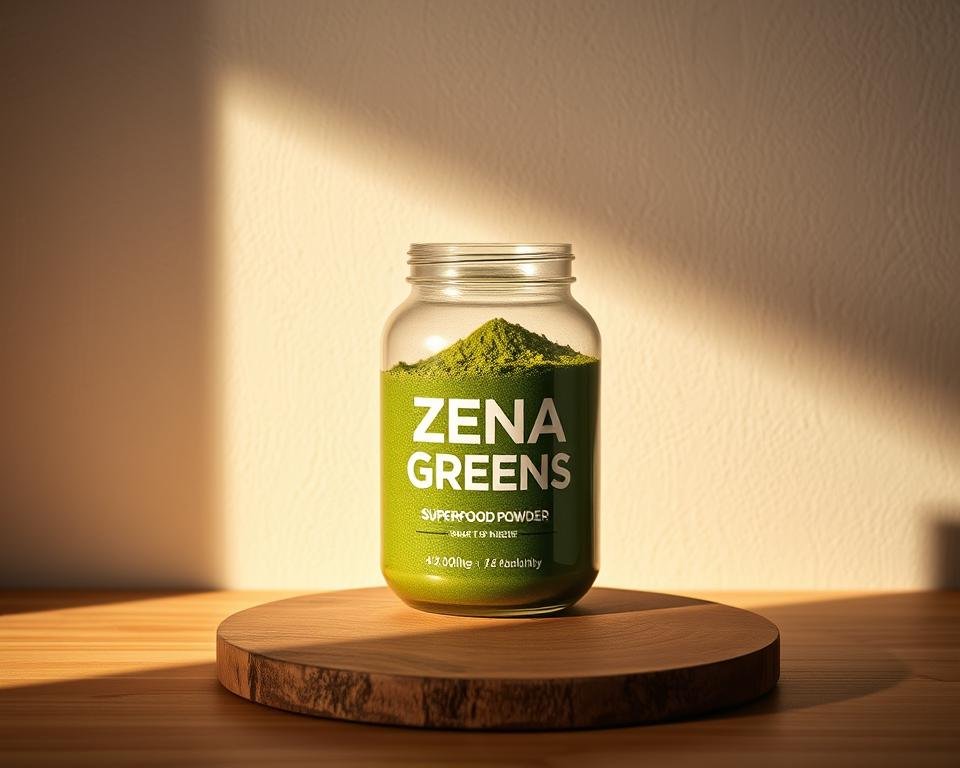

Zena Organic Supergreens offers a convenient way to add a broad mix of greens, fruits, vegetables, fiber, prebiotic ingredients, probiotic organisms, digestive enzymes, mushrooms, and botanicals to a daily routine. The current standard formula provides 3 grams of dietary fiber per serving and is positioned as USDA Certified Organic. Its biggest limitation is not the length of the ingredient list, but how little it tells you about the amount of most individual ingredients.
That distinction matters. Zena discloses two large blend totals, but it does not separately quantify ingredients such as ashwagandha, spirulina, chlorella, individual mushrooms, digestive enzymes, or probiotic organisms. That makes Zena easier to evaluate as a convenient general greens supplement than as a precisely dosed product for specific outcomes such as better energy, digestion, stress control, immunity, athletic performance, or blood-sugar management.
If convenience, an organic formula, a flavored drink mix, and broad ingredient coverage are your priorities, Zena has several practical advantages. If you want to know exactly how much of each active ingredient you are taking or want a supplement that can be matched closely to doses used in clinical research, its limited ingredient-level transparency is an important drawback.

What Zena Organic Supergreens Actually Contains
The current Zena Organic Supergreens formula is built around greens, fruits, vegetables, herbs, mushrooms, fiber, prebiotic ingredients, probiotics, and digestive enzymes. Zena markets the product as containing more than 70 superfoods, but the number of ingredients by itself does not tell you whether each one is present in a meaningful amount.
Current product documentation lists 3 grams of dietary fiber per serving and two major formula groups: a 4,619 mg Organic Greens, Fruits, Vegetables and Herbs Blend and a 2,411 mg Organic Fiber, Prebiotic, Probiotic and Digestive Enzyme Blend.
The ingredient list includes familiar greens such as spirulina, spinach, wheatgrass, barley grass, oat grass, kale, chlorella, alfalfa, and moringa. It also includes ashwagandha, green tea extract, multiple mushrooms, fruits and vegetables, acacia, inulin, digestive enzymes, and several probiotic organisms.
The approved Amazon option for this review is the Mango version packaged as 30 individual drink-mix sticks. Other Zena flavors and formats exist, so the Amazon listing below should be understood as that specific Mango 30-packet version rather than every Zena Organic Supergreens SKU.

What the Label Tells Us—and What It Does Not
Zena’s label provides enough information to establish the broad structure of the formula, but not enough to determine the dose of most individual ingredients. This is the central issue when evaluating the product.
Knowing that a blend contains 4,619 mg tells you how much the entire blend weighs. It does not tell you how much of that amount comes from spirulina, chlorella, ashwagandha, green tea extract, mushrooms, or any other individual component. The same problem applies to the 2,411 mg fiber, prebiotic, probiotic, and digestive-enzyme blend.
This does not mean the formula is ineffective. It means the label does not provide enough information to connect many of its ingredients confidently with the amounts used in published research. A long ingredient list and a clinically studied ingredient are not the same thing as a clinically studied finished product.
- Fills Nutritional Gaps: Each serving has 7g and 70+ types of superfoods and 3g of fiber to support overall wellness. Our blend also has organic greens, fruits, vegetables, herbs, super mushrooms, and prebiotics/probiotics with digestive enzymes for gut health support.
- Zero Sugar and Natural Ingredients: Zena Greens is a superfood supplement crafted with zero added sugars and organic ingredients. Our ingredients provide you with a wholesome and natural way to enhance your diet without compromising on quality
- Green Goodness On the Go: Our organic super green supplement comes in easy-to-tear stick packs so you can enjoy your daily greens supplement wherever you go. Bring the packs in your backpack, gym bag, purse, or even in a pocket
- Great-Tasting Wellness: Don’t compromise on flavor when taking your daily nutrition supplement powder. Our crisp and refreshing mango flavor doesn’t leave you with the bitter flavor and grassy aftertaste you get from other super greens
Zena Greens Claims vs. What the Evidence Can Actually Tell Us
A useful way to judge a greens powder is to separate what the label confirms from what the research can reasonably support.
Broad Greens and Superfood Coverage
What the label confirms: Zena contains a long list of greens, fruits, vegetables, herbs, mushrooms, and other plant ingredients.
What remains uncertain: The amounts of most individual ingredients are not disclosed. That prevents a meaningful comparison between the amount in Zena and doses used in clinical studies of individual ingredients.
What this means for you: The broad formula may appeal if you want convenience and variety in one scoop or packet. It is less suitable if your goal is to take a specific botanical or mushroom at a known dose.
Fiber, Prebiotics, Probiotics, and Digestive Enzymes
What the label confirms: The current formula provides 3 grams of dietary fiber and lists ingredients such as acacia and inulin alongside several probiotic organisms and digestive enzymes.
The probiotic portion includes organisms such as Lactobacillus rhamnosus, Lactobacillus plantarum, Lactobacillus acidophilus, Lactobacillus gasseri, Bifidobacterium longum, and Bifidobacterium lactis. However, the accessible label does not provide individual strain identifiers or CFU counts.
That missing information matters because probiotic effects can depend on the specific strain and dose. The NIH Office of Dietary Supplements explains that probiotic benefits can be strain- and dose-specific, and simply listing probiotic organisms does not prove a particular health outcome.
What this means for you: Zena clearly contains fiber, prebiotic ingredients, probiotic organisms, and digestive enzymes, but the label does not support strong claims that it will reliably reduce bloating, improve regularity, or produce a specific microbiome benefit.
Ashwagandha
Ashwagandha is present in the formula, but its individual dose is not disclosed. That prevents the amount in Zena from being matched confidently with doses used in research.
NCCIH’s ashwagandha guidance notes that some preparations have been studied for stress and sleep-related outcomes, while evidence is insufficient for many other proposed uses. Those findings cannot automatically be transferred to Zena because the amount and specific preparation used here are not established.

Green Tea Extract
The standard Zena Organic Supergreens formula lists green tea extract. A reliable caffeine amount for this version was not established, so it would be inaccurate to call the standard product caffeine-free or assign it a specific caffeine dose.
NCCIH’s guidance on green tea and green tea extracts also notes that concentrated extracts can interact with some medications and have different safety considerations from ordinary brewed tea. This does not mean Zena is inherently unsafe; it means the undisclosed amount makes individual exposure difficult to judge.

Mushrooms, Spirulina, Chlorella, and Other Botanicals
Zena includes multiple mushrooms along with spirulina, chlorella, grasses, and other plant ingredients. Many of these ingredients have been studied individually, but their presence on the label does not establish that Zena provides the same preparation or dose used in those studies.
This is why claims about detoxification, athletic performance, immune support, cholesterol improvement, or substantial energy benefits should be treated cautiously when evaluating the finished product.
Does Zena Greens Actually Work?
That depends on what you mean by “work.” If your goal is to add a convenient flavored greens supplement containing fiber, plant ingredients, probiotics, and digestive enzymes to your routine, Zena clearly fulfills that basic function.
If your goal is a measurable clinical effect—such as lowering blood sugar, significantly improving stress, improving athletic performance, correcting a nutritional deficiency, or treating digestive symptoms—the evidence is much weaker. No credible finished-product clinical trial establishing those major outcomes for Zena Organic Supergreens was identified in the supplied research.
Ingredient-level research can help explain why certain ingredients are interesting, but it cannot tell us whether the finished blend contains enough of those ingredients to reproduce the same result.
What USDA Certified Organic Means Here
Current Zena product materials identify Organic Supergreens as USDA Certified Organic. That is a useful product attribute for shoppers who specifically prioritize organic production and handling standards.
However, organic certification should not be interpreted as proof that the product is more effective, more potent, or clinically superior. USDA organic-labeling requirements regulate how qualifying organic products are produced, handled, and labeled; they are not a rating of health effectiveness.
Third-Party Testing and Manufacturing Claims
Zena states that its products are third-party tested and describes its manufacturing practices as cGMP compliant. Those are current manufacturer statements and are relevant when considering the brand’s quality-control positioning.
However, a batch-specific certificate of analysis or independent laboratory report for the exact Mango 30-stick Amazon SKU was not established in the verification material. It would therefore be too strong to say that independent evidence proves every batch is free from contaminants or verifies every potency claim.
Taste, Convenience, and Customer Experience
Convenience is one of the easier advantages to evaluate. Single-serve packets can be useful for travel, work, or anyone who would rather avoid measuring powder from a tub. Zena also offers multiple flavors and formats.
Manufacturer-hosted customer comments include positive remarks about drinkability, sweetness, mixing, and convenience. Some people appear to enjoy the flavored format more than earthy or grassy greens powders, while others describe the sweetness as stronger than they prefer.
Those comments are useful for understanding subjective attributes such as flavor and ease of use, but they should not be treated as clinical evidence. Reports of more energy, improved digestion, or other health changes remain anecdotal and do not establish that Zena caused those effects.
Safety and Who Should Be Cautious
Zena’s current retail labeling advises people who are pregnant or nursing, have a medical condition, or take prescription medication to speak with a doctor before use. That warning is particularly relevant because the formula combines many botanicals and extracts rather than relying on a single ingredient.
Ashwagandha deserves specific attention. NCCIH advises caution during pregnancy and notes potential concerns for people with thyroid or autoimmune conditions and for those taking certain medications. Because Zena does not disclose its individual ashwagandha dose, the safest approach is not to assume that the amount is either clinically meaningful or automatically negligible.
Green tea extract adds another reason to review the formula carefully if you take medication or are especially sensitive to caffeine. Its caffeine contribution in standard Zena Organic Supergreens was not established.
The probiotic blend also warrants some perspective. Probiotics are generally used widely, but NIH guidance notes that safety requires more caution in people who are severely ill or immunocompromised.
There is not enough verified product-specific information to support the older broad claims about warfarin, vitamin K amounts, or shared-facility allergen exposure. If you have a serious food allergy, a medical condition, or take prescription medication, check the current package label for your exact flavor and format and discuss the ingredient list with a qualified healthcare professional when appropriate.

Verified Strengths
- Convenient format: The approved Amazon version comes as 30 individual Mango drink-mix packets.
- USDA Certified Organic positioning: Supported by current Zena and retailer documentation.
- 3 grams of dietary fiber: Verified for the current standard formula checked.
- Broad ingredient coverage: Includes greens, fruits, vegetables, herbs, mushrooms, fiber, prebiotic ingredients, probiotic organisms, and digestive enzymes.
- Useful for general supplementation: May appeal to people who value convenience more than precise ingredient-by-ingredient dosing.
Limitations and Important Unknowns
- Most individual ingredient amounts are undisclosed: The label mainly gives aggregate blend weights.
- No verified probiotic CFU count: Probiotic organisms are listed, but strain-level identifiers and CFU potency were not established.
- Finished-product efficacy remains unclear: The available evidence does not establish major clinical benefits for Zena Organic Supergreens itself.
- Caffeine exposure is uncertain: Green tea extract is present, but the caffeine amount for the standard formula was not verified.
- Testing claims remain manufacturer claims: No batch-specific independent certificate for the approved Amazon SKU was established.
Who Zena Greens Is Best Suited For
Zena makes the most sense for someone looking for a convenient, flavored greens product with an organic certification and a broad ingredient mix. It may also appeal if single-serve packets make it easier for you to use a supplement consistently.
It is less compelling if your main priority is precision. Someone specifically seeking a known dose of ashwagandha, a strain-specific probiotic, a measured mushroom extract, or another targeted ingredient would generally benefit from a product that discloses those amounts directly.
It may also be unnecessary if you already eat a varied diet that meets your nutritional needs and you are considering Zena primarily because the long ingredient list makes it seem essential.
Is Zena Greens Worth the Price?
The strongest value case for Zena is convenience: one flavored serving provides a broad range of plant ingredients along with 3 grams of fiber, prebiotic ingredients, probiotic organisms, and digestive enzymes.
The tradeoff is transparency. You are paying for a broad all-in-one formulation without knowing the individual amounts of many ingredients that receive prominent attention in greens-powder marketing.
That means the product’s value depends heavily on what you expect from it. If you want a convenient organic greens drink and are comfortable with aggregate blend quantities, Zena can be a reasonable fit. If you are paying specifically for ashwagandha, mushrooms, probiotics, or another ingredient because of a particular research-backed dose, this formula gives you too little information to know whether you are getting that dose.
You can view the current Zena Greens listing on Amazon to check current availability and pricing for the approved Mango 30-packet version.
Realistic Expectations
A greens powder can add ingredients to your diet, but it should not be treated as a replacement for a varied eating pattern. FDA guidance on dietary supplements emphasizes that supplements can contribute nutrients but should not replace the variety of foods important to a healthy diet.
Zena is therefore easier to justify as a convenience product than as a shortcut to specific health outcomes. Its ingredient list may complement a routine, but it does not demonstrate that the product will reliably boost energy, improve immunity, control blood sugar, reduce stress, improve athletic performance, or fix digestive problems.
Final Takeaway
Zena Organic Supergreens has a practical appeal: it combines a broad ingredient list, 3 grams of dietary fiber, prebiotic ingredients, probiotic organisms, digestive enzymes, and an organic positioning in an easy-to-use flavored format.
The key limitation is equally clear. Most important ingredients are not individually quantified, so you cannot confidently connect many of Zena’s botanicals, mushrooms, enzymes, or probiotics with the doses used in research.
For general greens supplementation and convenience, that may be an acceptable compromise. For targeted supplementation or anyone who wants ingredient-level dose transparency, a more fully quantified formula would be easier to evaluate.
Frequently Asked Questions
Does Zena Greens actually work?
Zena can work as a convenient way to add fiber and a broad mix of plant ingredients, probiotics, prebiotic ingredients, and digestive enzymes to your routine. What has not been established is that the finished product reliably produces specific outcomes such as improved energy, digestion, immunity, blood-sugar control, stress reduction, or athletic performance.
Are Zena’s 70+ ingredients meaningfully dosed?
Zena currently markets Organic Supergreens as containing more than 70 superfoods, but most individual ingredient amounts are not disclosed. The label gives aggregate blend weights rather than enough ingredient-level information to determine whether many botanicals or mushrooms match research doses.
Does Zena Greens contain probiotics?
Yes. The current ingredient panel lists several probiotic organisms. However, accessible product information does not provide individual strain identifiers or CFU counts, so the formula cannot be matched confidently with strain- and dose-specific probiotic research.
Does Zena Greens contain caffeine?
The standard Organic Supergreens formula contains green tea extract, but a reliable caffeine amount was not established. It should therefore not be described as caffeine-free, and the caffeine amount from Zena’s separate Super Greens + Energy product should not be applied to this formula.
Is Zena Greens safe with medications or during pregnancy?
Zena’s current labeling advises people who are pregnant or nursing, have a medical condition, or take prescription medication to consult a doctor before use. This is especially relevant because the formula includes ingredients such as ashwagandha and green tea extract that have their own medication and health-condition considerations.
Can Zena Greens replace vegetables or a balanced diet?
No. It can be used as a dietary supplement, but it should not be treated as a substitute for a varied diet containing vegetables, fruits, whole grains, protein foods, and other nutrient sources.




Don’t Miss These Picks