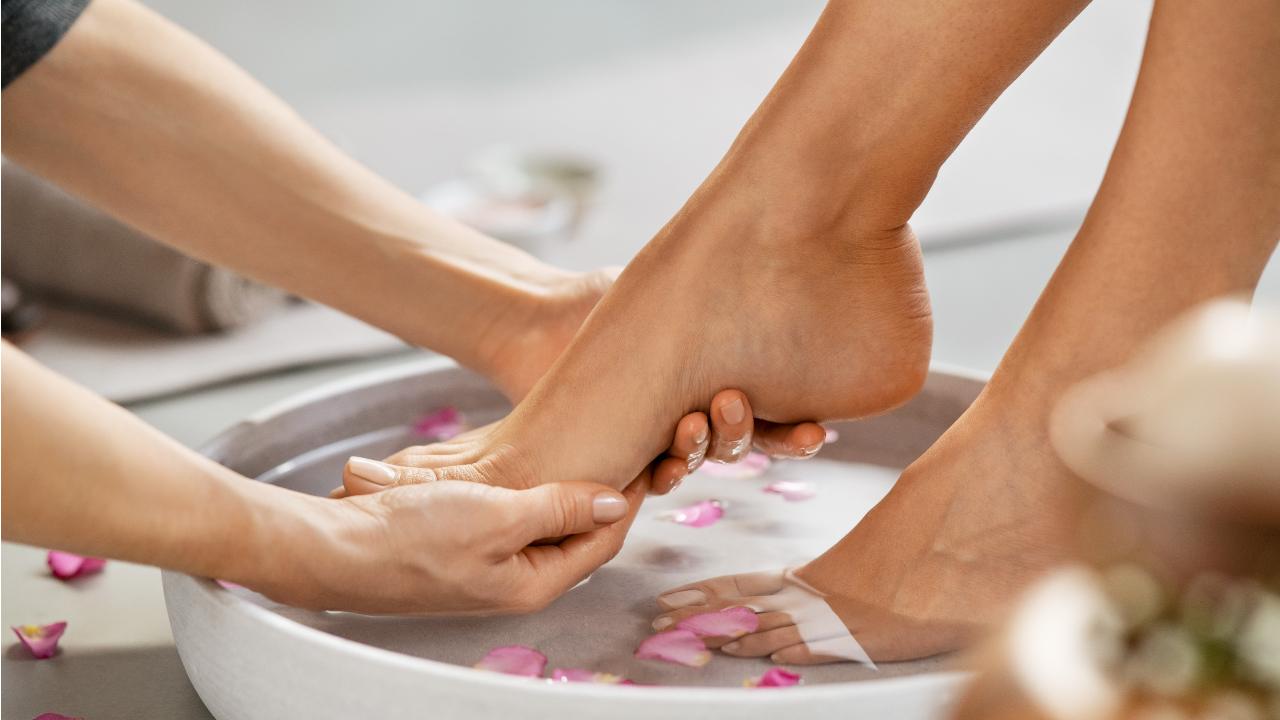

Thick dead skin on the feet is common, especially around the heels, balls of the feet, and areas that rub against shoes. The safest at-home approach is not to scrape harder. It is to soften the skin first, remove only the loose surface layer, then moisturize consistently.
This matters because rough skin can turn sore quickly if you cut it, peel it, or use harsh remedies. A gentle routine can help smooth dry, thick skin over time, but pain, bleeding, infection signs, numbness, diabetes, poor circulation, or deep cracks need medical guidance.
Quick answer
To remove thick dead skin from feet at home, soak your feet in warm water for 10 to 15 minutes, gently exfoliate only the softened rough areas with a pumice stone or non-blade foot file, rinse and dry the feet, then apply a thick foot cream or heel balm.
Do not cut, shave, peel, or aggressively scrape thick skin. These methods can injure the skin and raise the risk of irritation or infection, especially if the skin is cracked, bleeding, numb, or sensitive.
A good rule: if the skin feels sore, red, hot, or tender, stop the routine and let the area recover.
Key takeaways
- Thick dead skin is safer to reduce gradually, not in one aggressive session.
- Warm water softens rough skin so light exfoliation works with less pressure.
- Moisturizer matters as much as exfoliation because dryness often keeps the cycle going.
- Avoid blades, razors, harsh acid mixtures, and strong peeling products on thick or cracked skin.
- See a doctor or podiatrist for pain, bleeding, infection signs, diabetes, neuropathy, poor circulation, or unclear skin changes.
Helpful products at a glance
These products support the routine in different ways. They are not required for everyone, and they should not replace medical care when foot symptoms are serious or unclear.
Best for gentle exfoliation because it avoids blade-style removal
- For Soft, Smooth Feet - Maryton professional foot pumice stone to remove calluses and rough skin for soft, silky, smooth feet, also be used as pumice stone for body, hands and elbows
- Improved Foot Scrub Features - Maryton has been committed to inventing a best callus remover sponge for decades. This premium double sided pumice stone has 2 levels of coarseness to suit any type of calloused feet. Especially works great for exfoliating cracked heels, also widely used as shower foot scrubbers

Best for gradual smoothing because it combines moisture with lactic acid
- Derm-adored foot care products: AmLactin is the #1 dermatologist-recommended moisturizer brand with lactic acid, offering a solution for all skin types and challenges, from normal to dry skin, to ashy and flaky skin, and even keratosis pilaris
- It’s not just foot moisturizer, it’s skin therapy: Our foot cream for calluses and dry feet softens, heals tough skin, calluses, splits, cracks, boosting healthy renewal with resurfacing no-scrub exfoliation plus deep hydration

Best for overnight moisture support because it helps keep cream on the heels
- Premium Nylon/Spandex Blend
- Targeted Heel Hydration – Gel-lined heel socks help lock in moisture to soften and smooth dry, rough heels while you relax or sleep. The open-toe design keeps things light and breathable for comfortable wear.

Why thick dead skin builds up on feet
Feet deal with pressure every day. Standing for long hours, walking on hard floors, dry weather, open-back shoes, poor shoe fit, and friction can all make the skin thicken in certain areas.
Dryness can make the buildup look worse because the surface becomes rough, flaky, and uneven. Calluses can also form where the foot repeatedly rubs or bears pressure.
Sometimes the issue is simple dry skin. Other times, thick or peeling skin may be linked with corns, warts, fungal symptoms, eczema, or cracked heels that need more careful attention.
A safe at-home routine for thick dead skin
The goal is controlled softening and light removal. You are not trying to make the feet perfectly smooth in one session.
Safety-first foot care works best when you remove less than you think you need, then repeat gently over time.
| Step | What to do | Why it helps | Safety note |
|---|---|---|---|
| Soften | Soak feet in warm water for 10 to 15 minutes | Loosens dry surface skin | Avoid very hot water |
| Exfoliate | Use a pumice stone or gentle non-blade foot file | Removes loosened surface skin | Stop before soreness or redness |
| Moisturize | Apply a thick foot cream or heel balm | Supports smoother, less dry skin | Avoid open cuts or infected areas |
| Maintain | Use socks after moisturizing if helpful | Keeps moisturizer on the heel area longer | Use only on clean, intact skin |
Step 1: Soften the skin first
Fill a basin with warm water and soak your feet for about 10 to 15 minutes. Warm water can soften dry, rough skin so you do not need to use as much pressure later.
Do not use very hot water. It can dry the skin further and may be risky if your feet have reduced sensation.
Step 2: Gently exfoliate the loosened skin
After soaking, use a pumice stone or gentle foot file only on the thick, rough areas. Move slowly, use light pressure, and rinse the tool as needed.
Stop if the skin becomes sore, red, tender, or starts to sting. Thick dead skin should be reduced gradually. Trying to remove every layer at once can leave the foot irritated.
For readers who want a non-blade exfoliation option, a basic pumice stone can support the routine after soaking, as long as it is used gently and stopped before the skin feels sore. You can see this gentle exfoliation option on Amazon.
Step 3: Rinse, dry, and moisturize
Once you finish exfoliating, rinse your feet and pat them dry. Apply moisturizer while the skin is still slightly soft, but do not apply strong creams or active ingredients over open cuts, bleeding cracks, or infected-looking skin.
A lactic-acid foot cream can fit after the rinse-and-dry step because it supports moisture and gradual smoothing without encouraging you to scrape harder. This type of product may not suit freshly scrubbed, sensitive, cracked, or irritated skin, so read the label and start carefully.
If your feet sting after applying any cream, rinse it off and avoid using it again until the skin has calmed down.
Step 4: Use socks to lock in moisture
For very dry heels, apply moisturizer at night and wear clean socks afterward. This helps keep the cream on the skin instead of rubbing off on bedding.
Socks do not remove thick dead skin by themselves. They are a maintenance tool that may help the moisturizing step work more consistently.
Moisturizing heel socks can be useful after applying cream at night because they help keep the product on the heel area. If you prefer an open-toe heel-sock style, you can check this overnight moisture support option on Amazon.
Home remedies to use carefully
Some home remedies may soften rough skin, but they can also irritate the feet if used too strongly or too often. This is especially true for vinegar, lemon, baking soda, strong scrubs, and peeling products.
If you try a mild soak or scrub, use it only on intact skin. Avoid broken skin, bleeding cracks, burning, redness, or areas that already feel painful.
Warm water soak
A plain warm water soak is the safest starting point for most people with dry, rough skin. It softens the surface and makes gentle exfoliation easier.
Epsom salt soak
Some people like Epsom salt in a foot soak, but it is not necessary. If your skin feels dry or tight afterward, skip it and use plain warm water instead.
Vinegar, lemon, and baking soda
These ingredients can irritate skin, especially when used in strong mixtures. Avoid them if your heels are cracked, bleeding, sensitive, or already sore.
What not to do
Unsafe removal methods can turn a cosmetic foot-care problem into a wound. Be especially careful with anything that removes skin too quickly.
- Do not cut thick skin with scissors, razors, blades, or shaving tools.
- Do not peel attached skin by hand.
- Do not scrub until the skin becomes painful, red, or bleeding.
- Do not use harsh acid mixtures on cracked or sensitive skin.
- Do not use aggressive metal rasps or blade-style callus shavers at home.
- Do not use strong foot peels without checking warnings, especially if your skin is sensitive or you have health risks.
Helpful foot-care items to consider
Basic foot-care products can support the routine, but they should not push you toward harsher removal. The most useful options are the ones that help with gentle exfoliation, moisturization, or moisture retention.
| Support option | Best fit | Main tradeoff |
|---|---|---|
| Pumice stone | Loosened surface dead skin after soaking | Can irritate skin if used too hard or too often |
| Lactic-acid foot cream | Dry, rough feet that need moisture and gradual smoothing | May sting sensitive, cracked, or freshly scrubbed skin |
| Moisturizing heel socks | Keeping cream on dry heels overnight | Does not remove thick skin by itself |
Gentle exfoliation support
A pumice stone is a simple non-blade option for gently smoothing rough skin after soaking. It is best for surface-level dead skin that has already softened, not deep, painful, or recurring calluses.
- For Soft, Smooth Feet - Maryton professional foot pumice stone to remove calluses and rough skin for soft, silky, smooth feet, also be used as pumice stone for body, hands and elbows
- Improved Foot Scrub Features - Maryton has been committed to inventing a best callus remover sponge for decades. This premium double sided pumice stone has 2 levels of coarseness to suit any type of calloused feet. Especially works great for exfoliating cracked heels, also widely used as shower foot scrubbers
- Premium Pedicure Tools - Our best selling blue pumice stone set are widely used by spa salons across the USA. Made from high quality material and does great job of removing callus, this foot scrubber is trusted by professionals
- Pedicure Feet At Home - Foot pumice stone is a simple yet effective way to remove calluses. Perfect size, fits into the palm of the hand for easy use. Save time and money, enjoy your foot spa-like experience at home by using Maryton pumice stone for feet products
Moisturizing and gradual smoothing support
AmLactin Foot Repair Cream contains 15% lactic acid AHA and is positioned as a moisturizer and exfoliator for dry, rough foot skin. It may help moisturize and gradually smooth rough areas when used as directed.
Use caution if your skin is cracked, freshly scrubbed, irritated, or sensitive. Avoid open cuts, bleeding cracks, infected areas, or uncertain foot symptoms. You can see this moisturizing foot cream option on Amazon if this type of cream fits your routine.
- Derm-adored foot care products: AmLactin is the #1 dermatologist-recommended moisturizer brand with lactic acid, offering a solution for all skin types and challenges, from normal to dry skin, to ashy and flaky skin, and even keratosis pilaris
- It’s not just foot moisturizer, it’s skin therapy: Our foot cream for calluses and dry feet softens, heals tough skin, calluses, splits, cracks, boosting healthy renewal with resurfacing no-scrub exfoliation plus deep hydration
- Award-winning foot cream for dry feet: An exfoliating foot cream with clinically proven 15% Lactic Acid AHA that exfoliates to boost skin cell turnover plus deeply hydrates to revitalize and restore touchably soft skin
- Free-from formulas: This dye-free, paraben-free, phthalate-free, fragrance-free foot callus cream is rich, fast absorbing, non-greasy and pH balanced; formulated for rough, dry feet
Overnight moisture support
ZenToes Moisturizing Heel Socks are open-toe heel socks with a gel-lined heel area. They are designed to pair with lotion, cream, aloe, or foot balm so the product stays focused around the heel.
They may help support an overnight moisturizing routine, but they do not remove calluses or treat cracks. Skip them if the fabric or gel lining irritates your skin, or if you have open wounds, swelling, or infection signs.
- Premium Nylon/Spandex Blend
- Targeted Heel Hydration – Gel-lined heel socks help lock in moisture to soften and smooth dry, rough heels while you relax or sleep. The open-toe design keeps things light and breathable for comfortable wear.
- Nourishing Gel Care – The heel gel is infused with jojoba oil, olive oil, and vitamin E to help keep skin feeling soft and hydrated. Wear on their own or with your favorite lotion for an extra boost of care.
- Soft, Flexible Fit – Made from a plush, fuzzy fabric that feels gentle against your skin, these socks provide a comfortable fit you can wear all night long. Available in Regular (one size fits most) or Wide Width for a more relaxed, roomy feel—so you can choose what feels best for you.
When to see a doctor or podiatrist
Home care is not the right choice for every foot problem. Get medical advice if you have diabetes, neuropathy, poor circulation, numbness, open cracks, bleeding, pus, swelling, spreading redness, severe pain, or a bad smell.
You should also get checked if the thick area keeps coming back in the same spot, grows quickly, or looks more like a corn, wart, fungal infection, or another skin condition.
If you are unsure, choose the safer route. Feet can be slow to heal when circulation, sensation, or infection risk is involved.
How to prevent thick dead skin from coming back
Prevention usually comes down to reducing friction and keeping the feet moisturized. Use shoes that fit well, avoid long periods of barefoot walking on rough surfaces, and moisturize regularly.
Gentle exfoliation once in a while may help, but daily scraping is usually too much. If the same patch keeps thickening, shoe pressure or walking pattern may be part of the problem.
- Moisturize the feet after bathing or before bed.
- Wear comfortable shoes that do not rub the same area repeatedly.
- Use socks that reduce friction when needed.
- Exfoliate gently only when the skin is softened.
- Stop home care if pain, bleeding, or irritation appears.
FAQs
Can I remove thick dead skin from feet overnight?
Usually no. Thick dead skin is safer to improve gradually. Trying to remove too much at once can make the skin sore, raw, or irritated.
Is vinegar safe for removing dead skin from feet?
Vinegar may soften skin for some people, but it can also dry or irritate the feet. Avoid it on cracked, bleeding, sensitive, or painful skin.
Should I use a razor to remove thick skin from my feet?
No. Razors and blades can cut the skin and raise infection risk. Thick, painful, or recurring calluses are safer to discuss with a podiatrist.
What is the safest home method for rough feet?
A warm soak, gentle pumice stone or non-blade foot file, and thick moisturizer is usually the safest basic routine for dry, rough skin when there are no wounds, infections, diabetes-related risks, or severe symptoms.
Can foot cream remove thick dead skin?
Foot cream may help soften and smooth rough skin over time, especially when used consistently. It should not be treated as a quick fix for deep cracks, painful calluses, infection signs, or diabetes-related foot concerns.
How often should I exfoliate thick dead skin on feet?
Start gently and avoid frequent scrubbing. If the skin becomes sore, red, or tender, exfoliate less often and focus more on moisturizing.
Final verdict
Thick dead skin on the feet is best handled with patience. Soften first, exfoliate gently, moisturize well, and repeat the routine gradually instead of forcing fast removal.
If your feet are painful, bleeding, infected-looking, numb, or affected by diabetes or poor circulation, skip aggressive home care and get professional advice. Safe foot care is not about removing the most skin. It is about protecting the skin you still need.