

ProDentim is marketed as a chewable oral probiotic supplement, but the key question is not whether probiotics have been studied for oral health. It is whether the finished ProDentim formula itself has strong evidence behind its claims.
We did not find ProDentim identified among the ADA Seal resources checked, and we did not identify convincing published human clinical evidence testing the finished current ProDentim formulation. Research does exist on oral probiotics and on individual probiotic strains, but that evidence cannot automatically be applied to ProDentim when the exact strain, dose, formulation, and study conditions differ.
That distinction matters if you are considering ProDentim for concerns such as gum health, plaque, bad breath, or general oral care. The supplement may appeal to someone who wants to add an oral probiotic to an already solid dental routine, but it should not be treated as a proven treatment or as a substitute for established dental care.
Quick Verdict
ProDentim is best viewed as an optional oral-probiotic supplement with an interesting ingredient rationale but limited verified finished-product clinical evidence. Its manufacturer currently describes a chewable formula containing 3.5 billion probiotic organisms and identifies Lactobacillus paracasei, B. lactis BL-04, and Lactobacillus reuteri among its probiotic components.
The main limitation is evidence traceability. Research involving a particular probiotic species or even another strain of the same species does not prove that ProDentim will produce the same result. The product also should not be described as ADA approved simply because the ADA evaluates some oral-care products through its voluntary Seal program.
If you are comfortable with those uncertainties and want an optional oral probiotic alongside normal dental care, ProDentim may still be something you consider. If you want a product whose exact strains are easier to match with published research, the lack of complete strain-level transparency is a meaningful drawback.
ProDentim at a Glance
| Detail | What Is Currently Verified |
|---|---|
| Product type | Chewable oral probiotic dietary supplement |
| Probiotic amount | Manufacturer states a total of 3.5 billion probiotic organisms |
| Named probiotic components | Lactobacillus paracasei, B. lactis BL-04, and Lactobacillus reuteri |
| Other highlighted components | Inulin, malic acid associated with strawberry, tricalcium phosphate, and peppermint |
| Suggested use | Manufacturer directs users to slowly chew one tablet in the morning |
| ADA Seal | ProDentim was not identified in the current ADA Seal resources checked |
| Finished-product clinical evidence | No convincing published human clinical trial of the finished ProDentim formulation was identified during verification |
| Amazon status | No sufficiently trustworthy authorized Amazon.com listing was verified for the reviewed product |
The manufacturer also makes broader oral-health and wellness claims around the formula. Those claims should be separated from independently established evidence. A product can contain ingredients that have been studied without the finished commercial formula itself having demonstrated the same outcomes in clinical trials.
ProDentim Claims vs. What the Evidence Actually Shows
| Claim or Question | Evidence Level | What That Means for Buyers |
|---|---|---|
| ProDentim supports oral health through probiotics | Broader oral-probiotic research exists | The concept is plausible, but category-level research does not prove that the finished ProDentim formula produces a specific benefit. |
| L. reuteri has oral-health research behind it | Yes, for particular strains and study conditions | ProDentim does not sufficiently identify its L. reuteri strain on the current product information checked, so those study results cannot automatically be assigned to this product. |
| L. paracasei may support oral health | Some specific strains have been studied | Research on strains such as SD1, GMNL-33, GMNL-143, or ET-22 does not establish effects for an unspecified ProDentim strain. |
| B. lactis has periodontal research | Some strain-specific evidence exists | Studies involving B. lactis HN019 should not be treated as evidence for ProDentim’s B. lactis BL-04. |
| ProDentim is clinically proven | Not established | We did not identify convincing published human clinical evidence evaluating the finished current ProDentim formulation. |
| ProDentim has ADA approval | Not established | ProDentim was not identified among the ADA Seal resources checked. Lack of a Seal is not the same as rejection by the ADA. |
| ProDentim should improve plaque, gingivitis, cavities, or bad breath | Broader research exists for some probiotic approaches | Those outcomes should not be promised for ProDentim without finished-product evidence using its actual formulation. |
The useful rule here is simple: finished-product evidence is stronger than ingredient evidence, exact-strain evidence is stronger than species-level assumptions, and manufacturer claims are not the same as independent clinical proof.
Does ProDentim Have the ADA Seal of Acceptance?
We did not find ProDentim identified as an ADA Seal-accepted product in the current ADA resources checked.
That finding needs careful interpretation. The ADA Seal of Acceptance is a voluntary program. Manufacturers submit products for scientific review, and the ADA evaluates specific safety and effectiveness claims before a product can carry the Seal.
A product without the Seal should therefore not automatically be described as rejected, unsafe, ineffective, or disapproved by the ADA. It may simply not have gone through or completed that specific voluntary process. At the same time, lack of the Seal means buyers cannot use ADA acceptance as an independent product-specific validation point.
What an ADA Seal Does — and Does Not — Mean
The Seal tells consumers that a particular product and specific claims have gone through the ADA’s review process. It does not mean that every oral-care product without the Seal is poor quality.
It also does not answer the main scientific question about ProDentim: whether the finished commercial formula has been shown in well-designed human studies to produce the benefits being marketed. That requires product-specific evidence, not simply the presence or absence of an ADA Seal.
What Does the Research Say About ProDentim’s Ingredients?
Oral probiotics are an active area of research. Some studies have examined probiotic strains in relation to gingivitis, periodontitis, plaque-related outcomes, halitosis, and other oral-health measures.
A 2025 systematic review of probiotics in periodontal care found that probiotics have been studied as adjuncts in gingivitis and periodontitis. But the results depend on factors such as disease status, strain, formulation, treatment protocol, follow-up period, and accompanying dental care. The authors also noted the need for more standardized research.
That is useful background, but it is not a clinical trial of ProDentim.
Evidence for the Exact Strains Matters
Probiotic effects can be strain-specific. Two bacteria from the same species do not necessarily have the same clinical evidence.
This creates an important limitation for ProDentim. The current product information identifies Lactobacillus paracasei and Lactobacillus reuteri mainly at the species level rather than providing the full strain identifiers needed to match them confidently with individual clinical trials.
For example, research on L. reuteri DSM 17938 or ATCC PTA 5289 should not automatically be presented as research on every L. reuteri product. The same problem applies to L. paracasei. Studies involving SD1, GMNL-33, GMNL-143, ET-22, or another named strain do not prove that an unspecified strain inside ProDentim behaves the same way.
The B. lactis issue is even clearer. ProDentim identifies B. lactis BL-04. Periodontal research involving B. lactis HN019 should not be used as proof that BL-04 provides the same effect.
Ingredient Research vs. Finished-Product Evidence
Even if every probiotic strain were fully disclosed, a second question would remain: has the finished combination been tested?
A multi-ingredient supplement combines different strains, supporting ingredients, a particular delivery format, a specific dose, and a particular usage schedule. Evidence for one component does not automatically establish the effectiveness of the entire mixture.
This is the largest evidence gap in the ProDentim review. We did not identify convincing published human clinical evidence evaluating the current finished formula itself.
What Results Can You Realistically Expect?
There is no well-supported reason to promise that ProDentim will produce a particular result within four weeks, eight weeks, or any other fixed period.
Broader probiotic research varies widely in strain, dose, study length, participant population, and measured outcome. Some research has found changes in particular oral-health measures, while other findings are less consistent or apply only to certain treatment settings.
That means a reasonable expectation is much narrower than the marketing around many oral probiotics suggests. If you try ProDentim, it is better to think of it as an optional experiment within an established oral-care routine rather than as a predictable treatment with a defined timeline.
Do not use improvement or lack of improvement with a supplement to delay evaluation of persistent symptoms such as bleeding gums, tooth pain, swelling, loose teeth, or ongoing bad breath.
Safety, Side Effects, and Important Limitations
ProDentim’s current sales information advises people who are pregnant or nursing, taking medications, or living with medical conditions to consult a physician before using the product.
More broadly, NCCIH guidance on probiotics explains that probiotic products vary considerably and that evidence for many uses remains incomplete. Long-term safety information is also more limited than it is for many established treatments, and people with serious illness or compromised immune systems may require additional caution.
That guidance is general rather than ProDentim-specific. It does not establish that ProDentim is unsafe, but it is a reminder that the word “probiotic” should not be treated as a guarantee of benefit or universal safety.
There are also product-information gaps worth considering. The current material checked did not give enough detail to confidently verify the complete amount of every probiotic strain, a full strain list for all organisms, independent batch testing, a comprehensive allergen profile, or a precise viability guarantee through shelf life.
Who Might Consider ProDentim?
ProDentim may make sense for an adult who already brushes consistently, uses appropriate interdental cleaning, maintains routine dental care, understands that the evidence for the finished product is limited, and still wants to try an oral probiotic as an optional adjunct.
A practical way to think about the decision is:
- Define the goal. Are you looking for general oral support, or are you trying to treat a specific problem such as bleeding gums, bad breath, pain, cavities, or gum disease?
- Check the evidence level. Is the claim supported by research on the finished product, the exact strain, a different strain, or probiotics generally?
- Compare it with established care. Would standard preventive care or professional evaluation address the problem more directly?
- Consider the tradeoff. You are paying for an ongoing supplement despite limited finished-product evidence.
- Decide whether uncertainty is acceptable. Some buyers may be comfortable experimenting with an adjunct. Others may prefer a product with clearer strain identification or stronger product-specific data.
Who Probably Does Not Need It
You probably do not need ProDentim if you are mainly looking for a replacement for routine oral hygiene, fluoride toothpaste, interdental cleaning, dental examinations, professional cleanings, or treatment for diagnosed dental disease.
The ADA home oral-care recommendations continue to center on established preventive habits such as brushing twice daily with fluoride toothpaste, along with appropriate interdental care and personalized dental guidance.
An oral probiotic may sit beside those habits. It should not replace them.
When Dental Evaluation Matters More Than a Supplement
A supplement is a poor first response to persistent or worsening dental symptoms.
Bleeding gums that continue, swelling, tooth pain, loose teeth, ongoing bad breath, sensitivity that is getting worse, or signs of infection deserve professional assessment because they may reflect problems that need diagnosis and treatment rather than supplementation.
The same applies if you are considering ProDentim specifically because you suspect gingivitis, periodontal disease, cavities, or another dental condition. In those situations, the central question is not which probiotic to buy. It is what is causing the symptom.
Is ProDentim Worth Buying?
The strongest reason to consider ProDentim is convenience. It offers a chewable format built around an oral-probiotic concept, and the manufacturer clearly positions it as something that can be added to a daily routine.
The biggest reason to hesitate is evidence quality. We did not identify compelling published human clinical evidence for the finished current ProDentim formula, and important probiotic components are not disclosed with enough strain-level precision to connect them confidently with many individual studies.
The lack of a verified authorized Amazon.com listing is another practical drawback for buyers who prefer to confirm seller identity and product details through a familiar marketplace. Third-party listings using similar product names should not automatically be assumed to contain the same formulation.
For a buyer who values product-specific clinical evidence, complete strain transparency, and easy evidence traceability, those limitations are significant. For someone who understands the uncertainty and still wants to experiment with an oral probiotic alongside established dental care, ProDentim may remain an optional choice.
The buying decision therefore depends less on whether “probiotics are good” and more on how much evidence you expect from this specific commercial product.
If You Want a More Verifiable Oral-Probiotic Alternative
These products are not direct replacements for ProDentim, and neither has been established as producing the same outcomes. Their main advantage for comparison is clearer product identity and ingredient or strain disclosure.
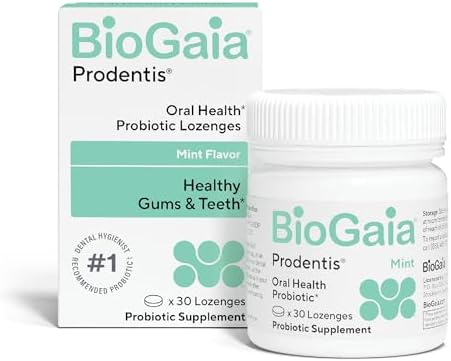
BioGaia Prodentis Oral Probiotics
BioGaia Prodentis is an oral probiotic lozenge using two specifically identified L. reuteri strains: DSM 17938 and ATCC PTA 5289. That strain transparency makes it easier to compare the product’s ingredients with strain-specific research.
It may appeal to readers who prefer a simpler formula and want to know exactly which L. reuteri strains they are buying. That does not mean every oral-health benefit associated with research on these strains is guaranteed for every user.
- THE ORAL PROBIOTIC BRAND DENTAL HYGIENISTS RECOMMEND MOST: BioGaia Prodentis is the #1 dental hygienist-recommended oral probiotic brand. Backed by 30+ years of probiotic research & 70+ clinical studies—2025 Konovo survey RDHs recommending oral probiotics.
- LIKE THE GUT, YOUR MOUTH BENEFITS FROM PROBIOTICS TOO: Your mouth contains a microbiome filled with good & bad bacteria. It’s the good bacteria that defend against common dental problems and keep the mouth fresh & healthy.*
Life Extension FLORASSIST Probiotic Oral Hygiene
FLORASSIST Probiotic Oral Hygiene uses a different approach. Current product information identifies Streptococcus salivarius BLIS M18 together with a postbiotic component derived from Lactobacillus plantarum L-137.
This may suit someone who wants a clearly labeled oral-health lozenge but does not need a formula that resembles ProDentim. The formulation is substantially different, so it should be evaluated on its own ingredients and evidence rather than treated as an equivalent substitute.
- Healthy teeth and gums – FLORASSIST Probiotic Oral Hygiene is a once-daily probiotic lozenge designed to promote overall periodontal (teeth and gum tissue) health with clinically studied oral probiotic and postbiotic strains.
- Inhibit unwanted bacteria – Our oral probiotic contains a probiotic strain clinically studied to help manage dental plaque and promote a healthy balance of the good bacteria in your mouth. We added a postbiotic strain to promote a healthy immune response.

Frequently Asked Questions
Does ProDentim have the ADA Seal of Acceptance?
We did not identify ProDentim among the current ADA Seal resources checked. That should not be described as an ADA rejection. The ADA Seal is a voluntary program in which manufacturers submit products and specific claims for evaluation.
Is there clinical research on ProDentim itself?
We did not identify convincing published human clinical evidence testing the finished current ProDentim formulation. Research exists on oral probiotics and on individual strains, but that is a lower level of evidence for judging this specific product.
What probiotics are currently listed in ProDentim?
The manufacturer currently identifies Lactobacillus paracasei, B. lactis BL-04, and Lactobacillus reuteri and states that the formula contains a total of 3.5 billion probiotic organisms. Exact strain identifiers were not sufficiently disclosed for all of those components in the product information checked.
Can ProDentim replace brushing, flossing, or dental visits?
No. An oral probiotic should be considered an optional adjunct rather than a replacement for brushing with fluoride toothpaste, appropriate interdental cleaning, preventive care, diagnosis, or treatment from a dental professional.
How long does ProDentim take to work?
There is no well-supported product-specific timeline that can be stated confidently. Research on oral probiotics varies by strain, formulation, condition, dose, and study duration, so claims that ProDentim normally works within a fixed number of weeks are not adequately established.
Who should speak with a healthcare professional before using ProDentim?
The manufacturer advises people who are pregnant or nursing, using medications, or living with medical conditions to consult a physician. General probiotic guidance also supports greater caution for people with serious illness or compromised immune systems.
Is ProDentim available through a verified Amazon listing?
We did not establish a sufficiently trustworthy authorized Amazon.com listing for the reviewed ProDentim product. Marketplace listings using similar names may differ in seller identity or formulation, so they should not automatically be assumed to represent the same product.
Final Verdict
ProDentim has a plausible oral-probiotic concept, but that is not the same as having strong clinical evidence for the finished product. The most important limitation is that available research is stronger at the broader probiotic or individual-strain level than it is for ProDentim itself.
The lack of an ADA Seal should not be interpreted as an ADA rejection, yet ProDentim also cannot rely on ADA acceptance as a product-specific trust signal. In the same way, studies involving other L. reuteri, L. paracasei, or B. lactis strains should not be used as proof that ProDentim produces the same outcomes.
For someone with a solid dental routine who accepts that uncertainty and wants to experiment with an optional oral probiotic, ProDentim may still be worth considering. For someone seeking proven treatment for gum disease, cavities, persistent bad breath, bleeding, pain, or other dental symptoms, professional evaluation and established dental care matter far more than adding a supplement.
The strongest buying criterion is therefore not the marketing claim or the presence of familiar probiotic names. It is whether the product provides enough specific evidence and transparency for the level of confidence you expect before paying for it.



Don’t Miss These Picks