
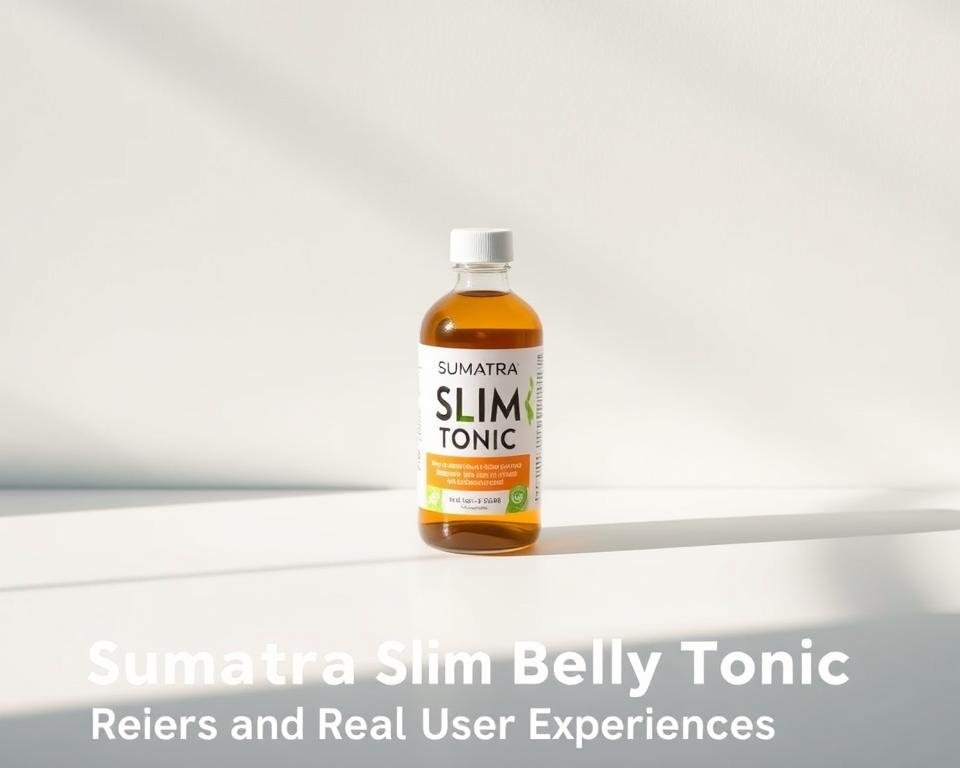

Sumatra Slim Belly Tonic is marketed around an appealing idea: improve sleep-related factors and make weight management easier. The problem is that a plausible connection between sleep and body weight is not the same as evidence that this specific supplement causes meaningful weight loss.
The product has been promoted as an eight-ingredient dietary supplement containing Valerian Root, Hops, Griffonia simplicifolia/5-HTP, Berberine, Spirulina Blue, Black Cohosh, Lutein, and Inulin. However, current individual ingredient amounts could not be established from a confidently authenticated Supplement Facts panel, and direct clinical evidence for the finished formula was not established.
Bottom line before you buy: the concept behind Sumatra Slim Belly Tonic is easier to defend than its stronger weight-loss marketing. Ingredient research may provide limited support for some individual components, but that does not demonstrate that the complete formula burns belly fat, reliably improves sleep, suppresses appetite, or produces significant weight loss.
- What appears established: The product has been marketed as a sleep-and-weight-management dietary supplement built around eight recurring ingredients.
- What remains uncertain: Current ingredient quantities, finished-product effectiveness, current retail availability, and the strength of any current refund terms.
- What was not established: Controlled clinical evidence showing that the finished Sumatra Slim Belly Tonic formula produces meaningful weight loss.
What Sumatra Slim Belly Tonic Claims to Do
The main sales idea behind Sumatra Slim Belly Tonic links sleep quality with metabolism, appetite, and body-weight regulation. Promotional material has presented the formula as a way to address factors associated with poor sleep while supporting weight management.
That proposition contains two very different questions. The first is whether sleep habits can matter for weight regulation. The second is whether taking this particular blend meaningfully changes body weight. Evidence relevant to the first question does not automatically answer the second.
This distinction matters because supplement marketing often moves quickly from a plausible biological mechanism to a much stronger outcome claim. Even if an ingredient affects sleep, serotonin pathways, digestion, or another process connected with appetite or metabolism, the finished product still needs evidence showing that the combination, dose, and serving schedule produce the promised result.
What Is Actually in the Formula?
Recurring promotional material for Sumatra Slim Belly Tonic identifies eight ingredients: Valerian Root, Hops, Griffonia simplicifolia or 5-HTP, Berberine, Spirulina Blue, Black Cohosh, Lutein, and Inulin.
The important limitation is dose transparency. Current individual milligram amounts for the ingredients could not be verified confidently. That prevents a meaningful comparison between the formula and doses used in clinical research on individual ingredients.
This is more than a minor labeling detail. A study showing an effect from a particular quantity of an ingredient cannot be used to predict the effect of a formula when the amount in that formula is unknown. Ingredient identity tells you what is present or promoted as present; dose helps determine whether the research is even relevant.
There is also conflicting promotional information about product format and serving directions. Some material describes a tonic or powder, while other seller-like pages reference capsules. Because those details could not be reconciled confidently, it would be misleading to present a precise current serving schedule here.
Claims vs. Evidence: How Strong Is the Case?
| Claim or Question | What Supports It | What Remains Unclear | What It Means for a Buyer |
|---|---|---|---|
| May support sleep | Some marketed ingredients, including valerian, are commonly used in sleep-focused supplements. | Evidence for valerian is inconsistent, current doses are unclear, and finished-product sleep trials were not established. | Do not assume the formula reliably improves sleep simply because it contains sleep-associated ingredients. |
| Supports weight loss | Sleep, appetite, diet, activity, and body weight can be related, and some individual ingredients have been studied separately. | Direct clinical evidence showing meaningful weight loss from the finished tonic was not established. | This is the largest evidence gap behind the product’s main commercial appeal. |
| Supports appetite or metabolism | Some ingredients have been researched for metabolic, digestive, or appetite-related outcomes in specific settings. | Current quantities and finished-formula effects are unknown. | Ingredient studies should not be treated as proof of reliable appetite control or metabolic change from this product. |
| Safe because ingredients are natural | Several ingredients have a history of dietary or supplement use. | Medication interactions and individual safety concerns remain important. | Natural origin does not remove the need to check medications, pregnancy status, health conditions, or side effects. |
| Worth buying | A combined formula may appeal to someone specifically interested in the sleep-and-weight concept. | Current price, doses, stock, direct evidence, and seller details are not all confidently established. | Buying confidence is weak until those practical uncertainties are resolved. |
Sleep-Support Claim
Valerian is one reason the formula may appear credible as a sleep-oriented supplement. However, evidence on valerian for sleep reviewed by the National Center for Complementary and Integrative Health remains inconsistent. That means valerian’s presence should not be translated into a claim that Sumatra Slim Belly Tonic reliably improves sleep.
Hops is also commonly associated with relaxation-oriented formulas, but the broader principle remains the same: evidence for an individual ingredient does not establish what happens when several ingredients are combined in an unverified dose pattern.
Weight-Loss Claim
The weight-loss case is considerably weaker. Poor sleep can coexist with behaviors and physiological changes that make weight management more difficult, but that does not establish a simple chain of events in which a supplement improves sleep and therefore causes fat loss.
For Sumatra Slim Belly Tonic, the key missing evidence is product-specific. Without a controlled study on the finished formula, there is no good basis for assuming that an ingredient’s proposed mechanism translates into clinically meaningful changes in body weight.
Appetite and Metabolic Claims
Ingredients such as berberine, inulin, spirulina, and 5-HTP have each been researched for different health-related outcomes. The difficulty is transferring those findings to this formula.
Research on one ingredient at a defined dose, in a defined population, for a defined period cannot tell us exactly what an eight-ingredient blend will do when the actual amounts in the blend are unclear. This is why the formula’s dose information matters as much as the ingredient list.
Ingredient Evidence: What Matters and What Does Not
Ingredient research can help determine whether a formula is completely implausible, but it is a lower level of evidence than testing the finished product itself.
Valerian illustrates the problem well. It is widely associated with sleep support, yet NCCIH notes that research has not established its usefulness for sleep problems conclusively. If the evidence for the individual ingredient is already mixed, it is even harder to justify a confident sleep or weight-loss claim for a multi-ingredient tonic containing an unknown amount of it.
5-HTP also deserves more attention for safety than for weight-loss marketing. It affects serotonin-related pathways, which makes medication interactions relevant. The presence of an ingredient with a plausible biological effect should increase scrutiny, not automatically increase confidence in efficacy.
Black cohosh is another example of why a long ingredient list should not be mistaken for a stronger formula. It has specific safety uncertainties and is not simply a general-purpose wellness ingredient. The useful question is not how many recognizable ingredients appear on a label, but whether the combination, amounts, evidence, and safety profile make sense for the intended user.
Does the Finished Product Have Direct Evidence?
Product-specific clinical evidence showing that Sumatra Slim Belly Tonic itself produces meaningful weight loss was not established during verification.
That does not prove that the product cannot have any effect. It means the confidence level should remain low when moving from ingredient-level research to claims about the complete formula.
A useful evidence hierarchy for supplements is:
- Finished-product evidence: Does the exact formula have controlled human research?
- Verified formula and dose: Are the actual ingredient amounts known and comparable with research?
- Ingredient evidence: Have individual ingredients shown relevant effects at meaningful doses?
- Marketing claims: What does the seller say the product should do?
For Sumatra Slim Belly Tonic, confidence becomes weaker as soon as the first two levels are examined. Finished-product evidence was not established, and current ingredient quantities remain unclear. That makes stronger conclusions based on the third and fourth levels difficult to justify.
Safety, Side Effects, and Medication Interactions
Dietary supplements should not be assumed safe simply because they are sold without a prescription. The FDA guidance on dietary supplement safety explains that supplements are not approved by FDA for safety and effectiveness before being marketed in the same way as approved drugs. Supplements can also interact with medicines or be unsuitable for some health conditions.
5-HTP is particularly relevant here. According to 5-HTP interaction guidance from Memorial Sloan Kettering Cancer Center, combining 5-HTP with medicines that affect serotonin can create clinically important interaction concerns. That includes certain antidepressants and other serotonergic drugs. This does not mean every combination will cause a serious reaction, but it is enough reason not to treat the ingredient casually when prescription medicines are involved.
Valerian may also have sedating effects. NCCIH advises caution with alcohol and sedative substances, which is relevant if the formula currently contains valerian as marketed.
Black cohosh adds another layer of uncertainty. Black cohosh safety information from NCCIH notes rare reports of serious liver injury as well as uncertainty during pregnancy and breastfeeding. The reported liver cases do not establish that black cohosh routinely causes liver injury, but they are enough to make medical history relevant.
Anyone who is pregnant or breastfeeding, takes antidepressants or sedatives, uses multiple prescription medicines, has liver concerns, or has another significant health condition has stronger reasons to review the formula with a healthcare professional before considering it.
Price, Guarantee, and Value
Current stable pricing could not be verified confidently. Historical and seller-associated pages have displayed different promotional tiers, while the primary SumatraTonic.com domain currently shows the product as sold out.
That makes a normal cost-per-serving comparison difficult. More importantly, value should be judged against evidence, not merely bottle price.
A supplement can be inexpensive and still represent poor value if the formula is unclear and the expected benefit is uncertain. Conversely, a higher price can sometimes be reasonable when a product has transparent dosing, strong quality controls, and useful clinical evidence. Here, the uncertainty around current dose disclosure and finished-product evidence weakens the value case.
A money-back guarantee would reduce some financial risk if valid for a current purchase, but a guarantee is not evidence that the supplement works. Refund terms are a sales policy, not a clinical outcome.
Because current retail details and refund terms could not be established confidently, prospective buyers should verify those details directly before paying rather than relying on older promotional pages or look-alike websites.
Who Might Consider It — and Who Should Skip It?
Consider Only After Verification
Sumatra Slim Belly Tonic may still interest someone who is specifically drawn to the sleep-and-weight-management concept and understands that the finished product has not been shown here to produce reliable weight loss.
Before considering it, that buyer should be able to verify the current ingredient panel, serving directions, seller identity, stock status, price, and refund terms. Medication compatibility should also be checked where relevant.
Probably Skip It
It is a weak fit for someone primarily looking for dependable weight loss, proven reduction of belly fat, reliable appetite suppression, or an established obesity treatment. The available product information does not justify those expectations.
It may also make little sense for someone who is interested mainly in improving sleep but has not first addressed basic sleep habits or persistent sleep problems that could warrant professional evaluation. A complex multi-ingredient supplement is not automatically the most direct answer to a sleep concern.
Discuss It With a Healthcare Professional First
Professional review is particularly sensible for people taking antidepressants, other serotonin-affecting medicines, sedatives, or several prescription medications. The same applies during pregnancy or breastfeeding and when liver disease or another relevant medical condition is present.
Final Verdict
Sumatra Slim Belly Tonic has a more plausible marketing concept than many simple “fat burner” pitches because sleep and weight regulation are genuinely connected in complex ways. But that does not solve the product’s central evidence problem.
The finished formula was not established here as clinically proven for weight loss. Current ingredient amounts are unclear, several ingredients carry meaningful safety or interaction considerations, and current purchasing details are uncertain. The primary brand domain currently showing the product as sold out further reduces buying confidence.
If your goal is reliable weight loss, the evidence does not make Sumatra Slim Belly Tonic a strong choice. If you are interested specifically in the sleep-related formula concept, the more reasonable position is to consider it only after verifying the current label, seller, dose information, availability, and medication compatibility—and with realistic expectations about what ingredient research can actually predict.
Frequently Asked Questions
Is Sumatra Slim Belly Tonic clinically proven to cause weight loss?
Finished-product clinical evidence demonstrating meaningful weight loss was not established. Research on individual ingredients or on the general relationship between sleep and body weight should not be treated as proof that this specific formula causes weight loss.
Is Sumatra Slim Belly Tonic currently available?
The primary SumatraTonic.com domain currently displays a Sold Out page. Other seller-like websites exist, but conflicting product formats, pricing, guarantees, and other details make it difficult to treat them as independently verified current sellers.
Is there a verified Amazon listing?
No qualifying current Amazon.com listing with a confidently verified ASIN and product identity was established. An Amazon search result or similarly named product should not be assumed to be the same formula.
What ingredients is Sumatra Slim Belly Tonic marketed as containing?
Recurring promotional material names Valerian Root, Hops, Griffonia simplicifolia/5-HTP, Berberine, Spirulina Blue, Black Cohosh, Lutein, and Inulin. Current individual ingredient quantities could not be verified confidently.
Can 5-HTP interact with antidepressants?
Yes, interaction concerns are relevant because 5-HTP affects serotonin pathways. People taking SSRIs, MAOIs, tricyclic antidepressants, linezolid, or other serotonin-affecting medicines should seek professional guidance before combining them with a 5-HTP-containing supplement.
Does a money-back guarantee mean the product works?
No. A guarantee can reduce financial risk if its terms are valid and honored, but it does not provide evidence of weight-loss effectiveness, sleep improvement, or safety.
Is valerian proven to improve sleep?
Not conclusively. Valerian is widely promoted for sleep, but independent reviews describe the evidence as inconsistent. Its presence in a formula therefore does not establish that the finished supplement will reliably improve sleep.
Who should be especially cautious with this formula?
People taking serotonin-affecting medicines, sedatives, or multiple prescription drugs deserve extra caution. Pregnancy, breastfeeding, liver concerns, and other medical conditions are also reasons to review the ingredient list with a healthcare professional before use.

Don’t Miss These Picks