

PTTD — posterior tibial tendon dysfunction — is one of those conditions where a generic ankle sleeve usually isn’t enough. The posterior tibial tendon runs along the inside of your ankle and helps hold your arch up. When it’s inflamed or weakened, the arch drops, and the pain tends to show up on the inner ankle, especially with walking or standing for long stretches. You need something that supports the arch, not just wraps around the ankle.
For that reason, the AIRCAST Airlift PTTD Ankle Support Brace is the strongest starting point. It’s the only pick in this roundup specifically designed for PTTD rather than general ankle sprains or instability.
That said, the biggest decision here isn’t which brand to buy — it’s which type of brace you actually need. A true PTTD brace, a lace-up stabilizer, and a knit comfort support can look similar in a product listing but feel completely different on the foot and solve different problems. If your symptoms are mild, the Med Spec ASO may be enough for daily wear. If comfort over long hours matters most, the Bauerfeind MalleoTrain is the easier brace to live with. If a basic sleeve has already let you down, moving up to something more structured is the smarter next step.
Best Ankle Brace for PTTD at a Glance
| Product | Best For | Key Strength | Main Tradeoff |
|---|---|---|---|
| AIRCAST Airlift PTTD Ankle Support Brace Check Price on Amazon | Anyone who wants a brace built specifically for PTTD | Semi-rigid support with an adjustable arch aircell — the only pick here designed for this condition | Bulkier than lace-up options; won’t disappear into regular shoes |
| Med Spec ASO Ankle Stabilizer Check Price on Amazon | Milder symptoms, everyday ankle control | Familiar lace-up format with real ankle stabilization | Not PTTD-specific; doesn’t address arch collapse directly |
| BioSkin TriLok Ankle Brace Check Price on Amazon | Middle-ground buyers who want arch support without the Aircast’s bulk | Figure-8 stabilizer plus FootLok arch-lift strap — more relevant to PTTD than a plain brace | Less established in this roundup than the Aircast; fewer verified details |
| Vive Ankle Brace Adjustable Ankle Sleeve Check Price on Amazon | Budget-conscious buyers testing brace wear for the first time | Simple, low-cost entry point before committing to something more specialized | Generic; not meaningful for serious PTTD needs |
| Bauerfeind MalleoTrain Ankle Support Check Price on Amazon | All-day comfort, mild symptoms, recovery days | Premium knit feel with contoured silicone pads — easy to wear for hours | Comfort-first, not structure-first; limited arch-lift support |
Our Top Picks
AIRCAST Airlift PTTD Ankle Support Brace
Amazon Link: Check Price on Amazon
Best For: Anyone who wants a brace that was actually designed for PTTD, not repurposed from a general ankle sprain product.
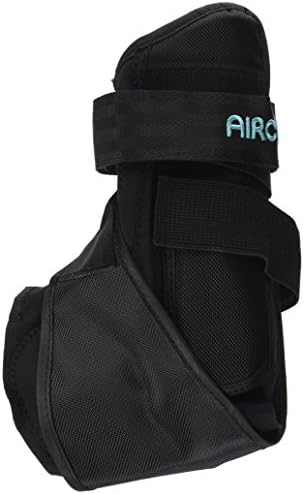
Why It Stands Out: Most ankle braces focus on lateral stability — preventing your ankle from rolling. That’s useful for sprains, but it’s not the main issue with PTTD. The problem with PTTD is the medial arch collapsing because the posterior tibial tendon can’t hold it up properly. The Aircast addresses that directly. The semi-rigid shell keeps the ankle from collapsing inward, and the air cell under the foot can be inflated with a small pump to dial in how much arch lift you get. You can adjust it while wearing it, which is genuinely handy since swelling and discomfort shift throughout the day. Two velcro straps instead of laces make putting it on and taking it off less of a production. It is bulkier than a regular brace and won’t fit in every shoe without some planning. Many people find it more comfortable worn over a thin sock. Those aren’t dealbreakers, but worth knowing before you buy.
- Designed for the treatment of Posterior Tibial Tendon Dysfunction (PTTD), or for early signs and symptoms of the adult acquired flat foot
- Accommodates variances in arch shapes and heights to lift the foot arch to a more natural foot position
- Simply adjust the 2 Velcro straps to secure the brace which eliminates time consuming lacing. Health Concern: Bone and Joint Health
- Inflation of the air cell (located under the foot) can be adjusted while worn with the included hand bulb air pump
Key Buying Details: PTTD-specific ankle brace; 11.5 x 2.5 x 4.75 inches; 8 ounces; semi-rigid shells with adjustable arch aircell; latex-free neoprene.
Key Pros:
- The only pick here built specifically for PTTD — not a general ankle brace repurposed for this condition
- Adjustable arch aircell lets you fine-tune support as swelling changes through the day
- More structured than anything else in this roundup
Key Cons:
- Bulkier than a lace-up brace; needs a roomier shoe to fit comfortably
- Some users report skin irritation if worn directly on skin rather than over a sock
- At least one buyer has flagged durability concerns with the air system over time
Good Fit If: You’ve already tried lighter sleeves or stabilizers and they haven’t made a real difference, or you know your symptoms are significant enough to need real arch support from the start.
Skip If: Your symptoms are mild and you need something slim that works inside regular footwear without any fuss.
Bottom Line: This is the lead pick because it’s the only one in the roundup that belongs in a PTTD conversation by design. It’s not the most comfortable or the most convenient brace here, but it’s the one that actually addresses what PTTD needs.
Med Spec ASO Ankle Stabilizer

Amazon Link: Check Price on Amazon
Best For: People with milder PTTD symptoms who want steady daily ankle control in a familiar, shoe-friendly format.
Why It Stands Out: The ASO has been a go-to lace-up stabilizer in athletic training for years, and it earns that reputation. It’s a real step up from a soft sleeve without pushing you straight into something that looks and feels more medical. The figure-eight straps limit inversion and eversion reasonably well, it fits inside most regular shoes, and the breathable lining makes it tolerable for longer wear. The honest caveat: it doesn’t address arch collapse. If that’s the core of your PTTD problem, the ASO will stabilize your ankle laterally but won’t do much for the medial tendon stress that’s actually driving symptoms.
- Helps Sprained Ankles Heal Faster – The ASO Ankle Stabilizer is a trusted ankle brace for sprained ankle recovery, rolled ankles, ligament & tendon injuries, and chronic ankle instability.
- Professional Support and Trusted ankle braces for men and women, widely recommended by athletic trainers and doctors for ankle support in basketball, volleyball, soccer, football, pickelball, running and tennis.
- Secure Stabilization That Fits in Shoes – Built with figure-8 straps for maximum control; this ankle wrap / brace limits painful twists while fitting inside most shoes.
- Breathable, Comfortable All-Day Wear – CoolFlex padding and tongue and durable nylon keep this orthopedic ankle support brace irritation-free while resisting stretch for long-term performance.
Key Buying Details: Lace-up ankle stabilizer; angled stabilizing straps; bilateral fit; spacer mesh and boot-style brace construction.
Key Pros:
- Familiar lace-up format that fits easily into daily routines
- Meaningful ankle control without the bulk of a more specialized brace
- Widely recommended by athletic trainers for general ankle stability
Key Cons:
- Not a PTTD-specific brace — it’s a lateral stabilizer
- Won’t help much if arch collapse is your main problem
Good Fit If: Symptoms are relatively mild, mainly showing up during activity, and you want something you can wear inside regular shoes without much adjustment to your routine.
Skip If: You’ve already tried a lace-up brace and it hasn’t helped, or you know the issue is the arch dropping rather than lateral ankle instability.
Bottom Line: The ASO is a solid brace in its category. Just be clear-eyed about what that category is — a lateral stabilizer, not a PTTD-specific solution. For mild daily support it’s a sensible pick. For serious arch control needs, it’s not the right tool.
BioSkin TriLok Ankle Brace

Amazon Link: Check Price on Amazon
Best For: Buyers who want more than a plain stabilizer but prefer something lower-profile than the Aircast.
Why It Stands Out: The TriLok bridges two things at once — figure-eight ankle stabilization and a FootLok strap that wraps under the foot to support the arch. That combination makes it more relevant to PTTD than a standard lace-up brace, without going all the way to the rigidity of a semi-rigid shell. It’s lightweight, fits in most shoes, and is hypoallergenic, which matters if you’re wearing a brace for hours and skin irritation is a concern. It’s also FSA/HSA eligible. I have slightly less verified day-to-day detail on this one than the Aircast or ASO, but the design logic is sound and it fills a genuine gap for people who want arch support built in without committing to the most structured option here.
- Lycra, Polyester
- Imported
- STABILIZES AFTER SPRAINS – Figure-8 wrap and stirrup strap add lateral stability for cutting, jumping, and uneven terrain.
- HELPS REDUCE RE-INJURY – External support helps control inversion/eversion during return-to-play and training.
Key Buying Details: Strap-based ankle brace with FootLok-style arch support; figure-8 stabilizer; lightweight and hypoallergenic materials; fits most shoes.
Key Pros:
- Arch-lift element makes it more relevant to PTTD than a plain stabilizer
- Low-profile enough to fit in regular footwear
- Good middle ground for people who find the Aircast too much
Key Cons:
- Less verified real-world detail in this roundup than the other picks
- Not a dedicated PTTD brace the way the Aircast is
Good Fit If: You want some arch support built into the brace design, prefer something that doesn’t require wider shoes, and don’t need the most aggressive structural option.
Skip If: You want the most clearly established PTTD-specific pick and don’t want to sit in a middle-ground product.
Bottom Line: The TriLok is the best middle-ground option in this list. It won’t do everything the Aircast does, but it’s more relevant to PTTD than a plain stabilizer — and a lot of people will wear it more consistently because it’s easier to live with day to day.
Vive Ankle Brace Adjustable Ankle Sleeve
Amazon Link: Check Price on Amazon
Best For: People who are very early in figuring out whether they even need a brace, and want a cheap way to test it before spending more.
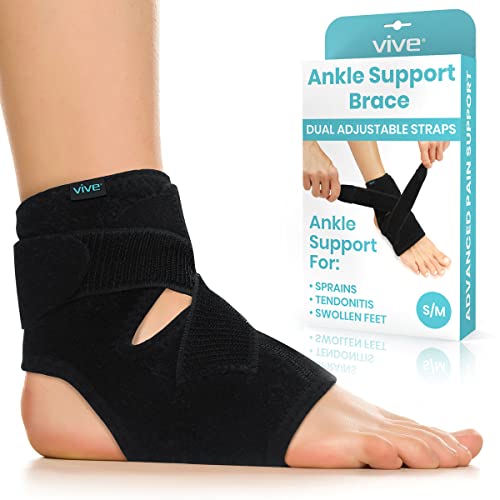
Why It Stands Out: It doesn’t, really — not for PTTD specifically. It’s a generic adjustable ankle brace. What it offers is a low-cost entry point for people who aren’t sure yet what they need. If you’ve never worn a brace before and want to see whether ankle support helps your symptoms before committing to something pricier, the Vive is fine for that purpose. If you’ve already tried something at this level and it didn’t help, buying another version of the same thing won’t change much. The next step is the TriLok or the Aircast, not a different generic brace.
- 𝗦𝗧𝗔𝗕𝗜𝗟𝗜𝗭𝗜𝗡𝗚 𝗖𝗢𝗠𝗣𝗥𝗘𝗦𝗦𝗜𝗢𝗡 𝗦𝗨𝗣𝗣𝗢𝗥𝗧: Provides additional stability and support for ankle tendons and joints, reducing the risk of injury. The fully adjustable light ankle brace reduces pain and pressure caused by arthritis, sprains, swelling, bursitis, tendonitis, muscle fatigue, injuries and surgery. Great for everyday wear and for running, hiking, baseball, tennis, golf, cycling, soccer, basketball and weightlifting.
- 𝗖𝗨𝗦𝗧𝗢𝗠𝗜𝗭𝗔𝗕𝗟𝗘 𝗖𝗢𝗡𝗧𝗢𝗨𝗥𝗘𝗗 𝗗𝗘𝗦𝗜𝗚𝗡: Split strap wrap is fully adjustable for a customized fit up to 14” in arch circumference, 12” ankle size. The open heel, contoured design allows for a minimal range of motion during recreational activities or sporting events to minimize the risk of injury.
- 𝗚𝗘𝗡𝗧𝗟𝗘 𝗖𝗢𝗠𝗣𝗥𝗘𝗦𝗦𝗜𝗢𝗡 𝗧𝗛𝗘𝗥𝗔𝗣𝗬: Adjustable cross-brace compression bands retain therapeutic heat and increase blood circulation to promote healing from injury or surgery. Provides customized support for weak or sore ankles.
- 𝗩𝗘𝗥𝗦𝗔𝗧𝗜𝗟𝗘 𝗟𝗜𝗚𝗛𝗧𝗪𝗘𝗜𝗚𝗛𝗧 𝗕𝗥𝗔𝗖𝗘: Breathable and lightweight, the neoprene blend is slim fitting for superior comfort. The versatile light ankle support can be worn on either foot, with or without socks and can easily be worn with most shoe styles.
Key Buying Details: Lace-up ankle brace; figure-eight straps; multiple sizes; bilateral use.
Key Pros:
- Low cost makes it a reasonable first experiment
- Simple to put on and take off
- Fine for mild general ankle support
Key Cons:
- Not designed for PTTD
- Won’t address arch collapse at all
- Easy to outgrow quickly if symptoms are more than very mild
Good Fit If: You’re at the very start of figuring this out and want to test whether wearing any ankle support helps before spending more.
Skip If: You already know a generic ankle brace hasn’t done much, or your symptoms are significant enough that you need real arch support.
Bottom Line: Reasonable as a first step, not as a PTTD solution. If it helps, great — but if symptoms are real and persistent, you’ll likely need to move up the ladder anyway.
Bauerfeind MalleoTrain Ankle Support

Amazon Link: Check Price on Amazon
Best For: All-day comfort wear, recovery days, or mild symptoms where you care more about wearability than structural support.
Why It Stands Out: Bauerfeind is a German medical device company with a solid reputation, and the MalleoTrain reflects that — it’s well-made, comfortable, and easy to wear for long stretches. The knit construction and contoured silicone pads around the ankle bones provide gentle compression and improve proprioception (your ankle’s sense of position), which helps with general stability. What it doesn’t do is provide the kind of firm arch lift that PTTD really calls for. It’s comfort-first, not structure-first. That’s not a criticism — it’s just what it is. Here’s the practical argument for it though: a brace you actually wear every day does more for you than a better brace that sits in the drawer because it’s uncomfortable. If stiffer braces feel intolerable, the MalleoTrain might be the one that gets worn consistently.
- Knitted ankle support incorporating an anatomically contoured silicone insert behind each ankle bone
- Silicone inserts leave ankle bones pressure-free and provide intermittent compression to the soft tissue of the joint, leading to increased circulation, thus aiding in the reduction of swelling and edema
- Promotes proprioception, thus heightening sensory awareness in the ankle for increased joint stabilization
- Anatomical knit carries controlled compression graduated at the edges to prevent constriction of circulation
Key Buying Details: Knit ankle support; anatomically contoured silicone pads around the malleoli; graduated compression edges.
Key Pros:
- Genuinely comfortable for all-day wear — easier to tolerate than most structured braces
- Quality construction that holds up over time
- Good for recovery days or as a complement to a more supportive brace on demanding days
Key Cons:
- Limited arch-lift support — not designed to address the structural aspect of PTTD
- One of the pricier options here for what it actually delivers in terms of PTTD-specific support
Good Fit If: You have mild symptoms, prioritize all-day wearability over maximum support, or want a comfortable everyday option to pair with a more supportive brace for heavier-demand situations.
Skip If: You need real structural support and arch control — this brace won’t deliver that.
Bottom Line: The MalleoTrain is the comfort pick, not the structure pick. Depending on where you are with PTTD, that might be exactly right. For moderate to serious symptoms, it’s better understood as a complement to proper support rather than a replacement for it.
Best Ankle Brace for PTTD by Use Case
- Best Overall: AIRCAST Airlift PTTD Ankle Support Brace — the only pick here designed specifically for PTTD, not repurposed from a general ankle sprain product.
- Best for Milder Daily Support: Med Spec ASO Ankle Stabilizer — solid lace-up ankle control for everyday wear when symptoms aren’t severe.
- Best Middle Ground: BioSkin TriLok Ankle Brace — the most useful option for people who want arch support built in without committing to the Aircast’s bulk.
- Best Budget First Step: Vive Ankle Brace — a low-cost way to test brace wear before deciding whether you need something more targeted.
- Best for All-Day Comfort: Bauerfeind MalleoTrain Ankle Support — the pick for people who will wear a comfortable brace consistently over a better brace they find intolerable.
Side-by-Side Comparison of the Top Picks
| Product | Best Use Case | Key Strengths | Main Tradeoff |
|---|---|---|---|
| AIRCAST Airlift PTTD Ankle Support Brace View on Amazon | Condition-specific PTTD support | Only brace here designed for PTTD; adjustable arch aircell; semi-rigid structure | Bulkier than everything else; needs a roomier shoe |
| Med Spec ASO Ankle Stabilizer View on Amazon | Mild daily ankle stability | Familiar lace-up; fits regular shoes; real lateral ankle control | General stabilizer — doesn’t address arch collapse |
| BioSkin TriLok Ankle Brace View on Amazon | Middle-ground arch and ankle support | Combines lateral stabilization with FootLok arch-lift; fits regular shoes | Less verified detail than other picks; not a dedicated PTTD brace |
| Vive Ankle Brace Adjustable Ankle Sleeve View on Amazon | Budget testing point for first-time brace users | Cheap; simple; bilateral use | Generic; not meaningful for PTTD |
| Bauerfeind MalleoTrain Ankle Support View on Amazon | All-day comfort, mild symptoms, recovery days | Premium knit; genuinely comfortable for long wear; good build quality | Comfort-focused, not structure-focused; limited arch support |
These braces are not interchangeable. The Aircast is the only one designed around PTTD. The ASO and Vive are lateral stabilizers. The TriLok adds arch support to the stabilizer concept. The Bauerfeind is a comfort support. Understanding those distinctions matters more than comparing price tags or brand names.
What Actually Matters Before You Buy
Understand what PTTD actually needs. The core issue is the medial arch collapsing because the posterior tibial tendon can’t hold it up. A brace that only stabilizes the ankle laterally isn’t solving that problem. You want something with arch-lift capability — ideally built into the design rather than an afterthought.
Don’t confuse ankle compression with arch support. Most people search “ankle brace” and end up looking at products designed for sprained ankles. Those braces squeeze and stabilize the outer ankle. That’s not the same as medial arch support, and for PTTD it usually isn’t enough.
Think honestly about whether you’ll actually wear it. A bulkier brace might sound better on paper, but if it’s so uncomfortable or inconvenient that you stop wearing it after a week, it’s not helping. The best brace is the one that matches both your support needs and your actual life.
Shoe fit matters more than most people expect. The Aircast needs a wider shoe. Lace-up stabilizers and the TriLok fit in most regular footwear. The Bauerfeind is the most low-profile. Factor that in before you order.
If symptoms are significant, see a clinician. PTTD can worsen meaningfully without proper management. A podiatrist or orthopedic specialist can tell you what stage you’re at and whether a brace is sufficient on its own or whether you need orthotics, physical therapy, or something else alongside it.
What Most Buyers Get Wrong
- Buying a generic ankle sleeve and expecting it to help PTTD. Sleeves provide compression and light support. PTTD needs arch lift. Those are different things and most product pages won’t make that obvious.
- Assuming more structure is always better. If your symptoms are mild and the brace is too bulky or uncomfortable to wear consistently, you’d have been better off with something lighter that you actually use.
- Going too light when symptoms are already serious. If walking a normal amount causes pain that lingers for hours, a comfort support isn’t going to cut it. Move up the ladder.
- Buying another version of the same thing that didn’t work. If a generic lace-up brace hasn’t helped, a different generic lace-up brace probably won’t either. The issue is likely the type of support, not the brand.
Safety and Expectation Notes
A brace can reduce load on the tendon, slow or prevent arch collapse during wear, and make daily activity more manageable while the tendon heals or stabilizes. What it can’t do is reverse structural changes that have already happened or fix the underlying condition on its own.
The braces in this roundup serve different roles. Some are condition-specific support tools. Others are general stabilizers or comfort supports. They’re not equal substitutes, and not every one of them is appropriate for every stage of PTTD.
If symptoms are persistent, getting worse, or making normal walking difficult, get a proper evaluation rather than cycling through more braces. Self-selecting a brace is reasonable as a starting point — it shouldn’t replace professional assessment when symptoms are limiting your daily life.
How to Use an Ankle Brace for PTTD at Home
Start by matching the brace type to what you actually need. If symptoms are mild, a lace-up stabilizer or the TriLok may be enough to start. If arch collapse and walking pain are the main issues, go straight to the Aircast rather than working up to it slowly through products that won’t address the real problem.
Be realistic about wear habits. If a brace is uncomfortable enough that you take it off after an hour, it’s not working. Some people wear a comfort-oriented brace every day and a more supportive brace for demanding activities. That combination approach can make sense.
Don’t mistake feeling compressed for being well supported. Tightness isn’t the same as arch lift. In this condition specifically, where the support is applied matters more than how firmly the brace squeezes.
How We Chose These Picks
These picks were selected based on product specifications, manufacturer information, buyer-fit logic, and how well each brace fits a distinct role in the support spectrum for PTTD. The goal was to represent genuinely different options — a condition-specific brace, a general stabilizer, a middle-ground arch-support option, a budget entry point, and a comfort-first premium pick — rather than listing five variations of the same thing.
Where buyer feedback was clearly available and consistent, it’s noted. Where it wasn’t, claims were left out rather than guessed at. No hands-on testing is being claimed here.
Final Verdict
For most people searching for the best ankle brace for PTTD, the AIRCAST Airlift PTTD Ankle Support Brace is the strongest recommendation. It’s the only pick here that starts from a PTTD-specific design rather than adapting a general ankle brace for a different purpose.
If symptoms are mild and you want something lighter for daily wear, the Med Spec ASO is the better fit. If you want arch support without the Aircast’s bulk, the BioSkin TriLok is the middle-ground pick. The Vive is a reasonable first experiment if you’re not sure yet what you need. And the Bauerfeind MalleoTrain is worth considering if comfort and consistent daily wear matter more to you than maximum structural support.
The best pick depends on where you are with the condition and what you’ll actually wear. That matters more than the brand name on the box.
FAQ
Is a regular ankle sleeve enough for PTTD?
Usually not. Sleeves provide compression and mild support but don’t address arch collapse, which is the core mechanical issue with PTTD. You typically need something with arch-lift capability built in.
What kind of brace makes the most sense for PTTD?
It depends on how serious your symptoms are. For real arch support and condition-specific design, the Aircast is the strongest option. For milder symptoms, a lace-up stabilizer or the TriLok may be enough. Comfort-first knit supports make sense when daily wearability is the priority and symptoms are mild.
Are all the braces in this roundup appropriate for every stage of PTTD?
No. They serve different roles — condition-specific support, general stabilization, arch-lift middle ground, and comfort wear. They’re not interchangeable, and what makes sense early in the condition may not be enough if it progresses.
What is the main mistake buyers make in this category?
Assuming any ankle compression product counts as PTTD support. The key question isn’t whether the brace feels tight — it’s whether it provides meaningful arch lift and medial support. Many products that show up in search results for “ankle brace for PTTD” are general stabilizers that don’t really address the condition.
Should I go straight for the most supportive brace?
Not always. If your symptoms are mild, starting with something more manageable makes sense. But if you already know your symptoms are significant, skipping the lighter options and going straight to the Aircast will probably save you time and frustration.
When should I see a professional instead of trying another brace?
If symptoms are persistent, getting worse, or making normal walking painful, stop cycling through braces and get a proper evaluation. A podiatrist or orthopedic specialist can tell you whether a brace is sufficient or whether you need orthotics, physical therapy, or other treatment alongside it.