
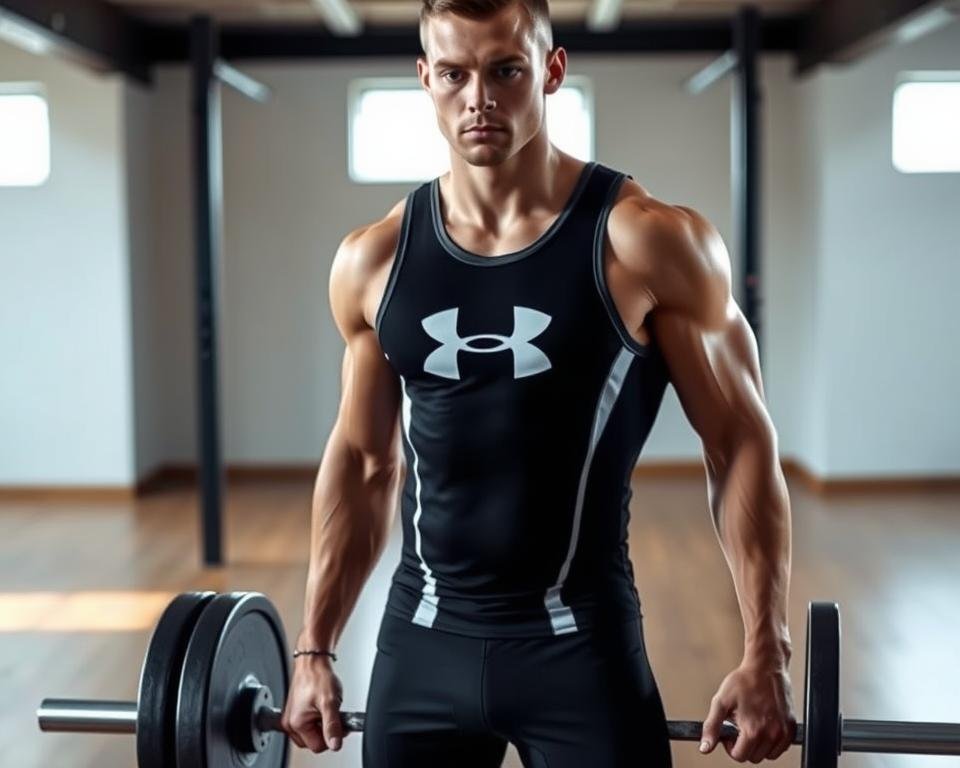

Under Armour Weightlifting Singlet Review: Is It Worth Buying?
The biggest problem with recommending the Under Armour Weightlifting Singlet today is not its compression, comfort, or brand name. It is product identity. The singlet described in older review material cannot be confidently tied to a current Under Armour model, official product page, verified specification sheet, or current Amazon listing.
That changes the buying answer considerably. If you need a singlet for an upcoming powerlifting or Olympic weightlifting competition, a garment with uncertain specifications and eligibility is difficult to recommend. Fit, current federation rules, verified construction, sizing information, and reliable availability matter more than broad claims about compression improving performance.
This does not mean the singlet was necessarily a poor product. It means there is not enough current product-specific evidence to support the strong claims often attached to it. The most useful way to assess it now is to separate what can be established from what should remain uncertain.
Key Takeaways
- The exact Under Armour lifting singlet described in older material cannot currently be identified with enough confidence for a firm purchase recommendation.
- Specific claims about HeatGear, fabric percentages, flatlock seams, odor control, leg grippers, sizing, or care should not be assumed for this unidentified singlet.
- Compression may affect how a garment feels and may influence some sensorimotor measures, but it should not be treated as proof of stronger lifts or better technique.
- Competition eligibility depends on the rules of the lifter’s actual federation and event.
- Competitive lifters are better served by a singlet with clearly documented sizing, construction, current availability, and rule compatibility.
- Casual lifters who do not compete may have little reason to pay extra for a dedicated competition-style singlet.
Under Armour Weightlifting Singlet: Product Snapshot
| Buying Detail | What Can Be Established |
|---|---|
| Exact model | Not confidently identified |
| Current Under Armour listing | Not established for the reviewed singlet |
| Current Amazon availability | Not verified |
| Fabric composition | Not verified for this singlet |
| HeatGear construction | Not verified for this singlet |
| 4-way stretch / flatlock seams / anti-odor features | Not verified for this singlet |
| Sizing guidance | Not verified for this singlet |
| Care instructions | Not verified for this singlet |
| Competition approval | Not established |
Under Armour currently uses compression and HeatGear terminology on some of its apparel, but that does not establish that the older one-piece singlet used the same fabric, technology, construction, or care instructions. Specifications from a current compression shirt should not be transferred to a different product simply because both carry the Under Armour name.
This verification gap is the main limitation of the review. Without a precise model or current product page, it is difficult to judge value, fit, durability, or competition suitability with the confidence expected from a current buyer guide.
Best For / Skip If
It May Make Sense to Consider Only If
- You can independently identify the exact model being sold.
- You can obtain a current sizing chart for that exact garment.
- You can confirm that its construction fits the rules of your federation and event.
- You are buying from a source that clearly identifies the product rather than relying on a vague historical description.
- You specifically want a dedicated singlet for competition practice or meet use.
Skip It If
- You need a verified competition singlet soon and cannot confirm the model or its eligibility.
- You are choosing it mainly because of claims that compression will increase strength or improve technique.
- You cannot find current sizing information.
- You are a recreational lifter with no competition plans and do not otherwise want to train in a singlet.
- You would be paying a premium mainly for the brand name while basic product details remain unclear.
The decision is especially simple for meet-day use: verified eligibility is more valuable than impressive marketing language. A less glamorous singlet with documented specifications and clear rule compatibility is generally a more practical purchase than a branded garment you cannot confidently identify.
Material, Construction and Verified Features
Older descriptions of this Under Armour singlet have attributed a long list of features to it, including a specific nylon/elastane blend, HeatGear fabric, 4-way stretch, flatlock seams, odor control, and leg-gripping construction. Those details should not be repeated as established facts without documentation for the exact model.
That distinction matters because brands often use different fabrics and construction methods across product lines and generations. A feature appearing on one Under Armour compression garment does not prove it appeared on this singlet.
For a current buyer, the useful questions are straightforward: What is the exact fabric composition? How much stretch is built into the garment? How are the seams positioned? Does the manufacturer provide a size chart? Are there construction details that could affect comfort around the shoulders, hips, or thighs? If those answers are missing, the product is harder to evaluate objectively.
Fit and Sizing
A lifting singlet should fit close to the body without interfering with the positions you need for your sport. It should not be so loose that excess fabric shifts substantially during a lift, but tightness alone is not a sign of better performance.
For practical fit, check whether you can squat to your normal depth, hinge comfortably, raise and position your shoulders as required, and move through the hips without the garment creating a meaningful restriction. The exact fit also depends on torso length, thigh size, shoulder width, and the cut of the singlet.
That is another reason the unresolved sizing information matters here. Without a current size chart for the exact Under Armour model, there is no reliable basis for giving product-specific advice about whether to size up, size down, or choose a particular size at a certain body weight.
Comfort and Compression: What to Realistically Expect
Compression can make a garment feel secure and close to the body. Some lifters may prefer that sensation because there is less loose material during movement. That is a reasonable comfort or fit preference. It should not be turned into a claim that the singlet will increase strength.
A peer-reviewed review of research reviewing compression garments and exercise outcomes found mixed evidence across performance and recovery outcomes. That does not support assuming that a commercial lifting singlet will directly improve squat, bench press, deadlift, snatch, or clean-and-jerk performance.
There is also some evidence that compression garments can influence certain proprioception-related measures. A systematic review and meta-analysis of research on compression garments and proprioception found effects in some joint-position-sense outcomes, but results were not uniform across all measures.
For a buyer, the useful interpretation is simple: compression may change how a garment feels and how some sensory feedback is experienced, but that does not establish better technique, stronger lifts, reduced injury risk, or improved competition results.
Competition Suitability: What You Must Check
A singlet looking appropriate for lifting does not automatically make it legal for competition. The rules depend on the sport, federation, event, and sometimes the equipment manufacturer.
For powerlifting, the current IPF technical rules set requirements for the singlet used in competition. The rules address the type of garment permitted and other technical conditions. Those requirements do not establish that this unidentified Under Armour singlet is acceptable.
Olympic weightlifting uses a different rule set. The IWF weightlifting costume rules describe a one-piece, collarless costume that does not cover the elbows or knees. Again, meeting that broad shape description alone does not prove that a particular unidentified garment is suitable for every competition.
Before buying any singlet for a meet, work through these questions:
- Are you competing in powerlifting or Olympic weightlifting?
- Which federation or organization is running the event?
- What are its current clothing and equipment rules?
- Does it maintain an approved-manufacturer or approved-equipment list?
- Can the exact model you want to buy be identified clearly?
- Can you confirm the garment’s design and specifications against the current rules?
This check is far more useful than relying on a product description that simply calls a garment a “powerlifting” or “weightlifting” singlet.
Durability and Care
There is not enough verified evidence to make strong durability claims about this Under Armour singlet. Statements such as “holds its elasticity after repeated washing,” “resists barbell abrasion,” or “stays secure after months of training” would require reliable long-term product evidence or genuine hands-on testing.
Construction can sometimes suggest where a garment may be more or less durable, but even that requires the exact material and seam details. Those specifications are unresolved here.
The same limitation applies to care. Without manufacturer instructions for the exact singlet, it would be inappropriate to provide a product-specific washing temperature, drying method, or detergent recommendation as fact. If you find an identifiable version for sale, use the care label and documentation supplied for that model rather than instructions copied from another Under Armour garment.
Pros and Cons
| Pros | Cons |
|---|---|
| A dedicated singlet format can be practical for lifters preparing for competition. | The exact reviewed product cannot currently be identified with confidence. |
| A close-fitting garment can reduce loose fabric during lifting. | Current sizing guidance has not been established. |
| The Under Armour brand may appeal to lifters already comfortable with its athletic apparel. | Specific HeatGear, fabric, seam, odor-control, and leg-gripper claims are unverified for this singlet. |
| The product remains relevant as a case study in what buyers should verify before purchasing a singlet. | Competition eligibility cannot be assumed. |
| No current verified Amazon listing or dependable price is available from the evidence reviewed. |
Is It Worth Buying?
As a current purchase, the Under Armour Weightlifting Singlet is difficult to recommend confidently because too many basic buying details remain unresolved. The issue is not that the singlet has been shown to be poor. The issue is that the exact model, specifications, sizing, current availability, and competition status cannot be established strongly enough.
For a competitive lifter, that uncertainty is a meaningful drawback. You are better served by a singlet whose exact identity, size chart, construction, current availability, and relevant competition requirements can be checked before purchase.
For a non-competing lifter, the case is even weaker unless you specifically want to train in a singlet. A compression-style garment does not need to be treated as performance equipment, and paying extra for an unidentified competition-style product offers little obvious advantage.
If the exact Under Armour model later becomes identifiable through reliable manufacturer documentation or a clearly verified current listing, it could be reassessed on its actual specifications. Until then, the sensible verdict is to avoid making a purchase based on the older feature and performance claims alone.
Frequently Asked Questions
Can the Under Armour Weightlifting Singlet be used in competition?
That cannot be confirmed for the unidentified product. Competition legality depends on the current rules of your federation and event, so verify the exact singlet against those requirements before buying it for meet use.
Are powerlifting and Olympic weightlifting singlet rules the same?
No. Powerlifting and Olympic weightlifting have separate rule sets. For example, the IPF and IWF publish different technical requirements for competition apparel, so you should use the rules that apply to your actual event.
How tight should a lifting singlet fit?
It should generally fit close to the body while still allowing the positions required for your lifts. You should be able to squat, hinge, move through the hips, and position your shoulders without the garment meaningfully restricting movement.
Does compression improve lifting performance?
Not reliably enough to assume that it will make you lift more weight. Compression may change garment feel and may influence some sensory or physiological measures, but the available evidence does not justify treating a commercial singlet as a direct strength-enhancing tool.
What should you wear under a lifting singlet?
That depends on the rules of your federation and event. Competition organizations may regulate what can be worn underneath a singlet, so check the current rulebook rather than relying on general gym apparel advice.
Is a lifting singlet the same as a wrestling singlet?
Not necessarily. The garments can look similar, but competition requirements are sport-specific. A wrestling singlet should not automatically be assumed to satisfy powerlifting or Olympic weightlifting rules.
How should the Under Armour singlet be washed?
No exact care instructions can be given confidently because the precise product has not been identified. Follow the care label and manufacturer instructions for the exact garment you own rather than applying instructions from a different Under Armour compression product.
Do recreational lifters need a singlet?
Usually not unless they enjoy training in one or want to practice in competition-style clothing. For general strength training, a dedicated singlet is not required to perform the major lifts.
Final Verdict
The Under Armour Weightlifting Singlet is no longer a product that can be judged responsibly from brand reputation and old feature claims alone. Too many essentials remain uncertain: the exact model, current specifications, size guidance, care instructions, availability, and competition eligibility.
The strongest buying rule is therefore simple. If you compete, prioritize a clearly identifiable singlet that fits properly and can be checked against your federation’s current requirements. If you do not compete, decide whether you actually need a dedicated singlet before paying for one.
Compression can be a useful fit preference, but it should not be confused with proven strength enhancement. Until the exact Under Armour product can be identified and verified, there is not enough current evidence to recommend it as a confident buy.


Don’t Miss These Picks