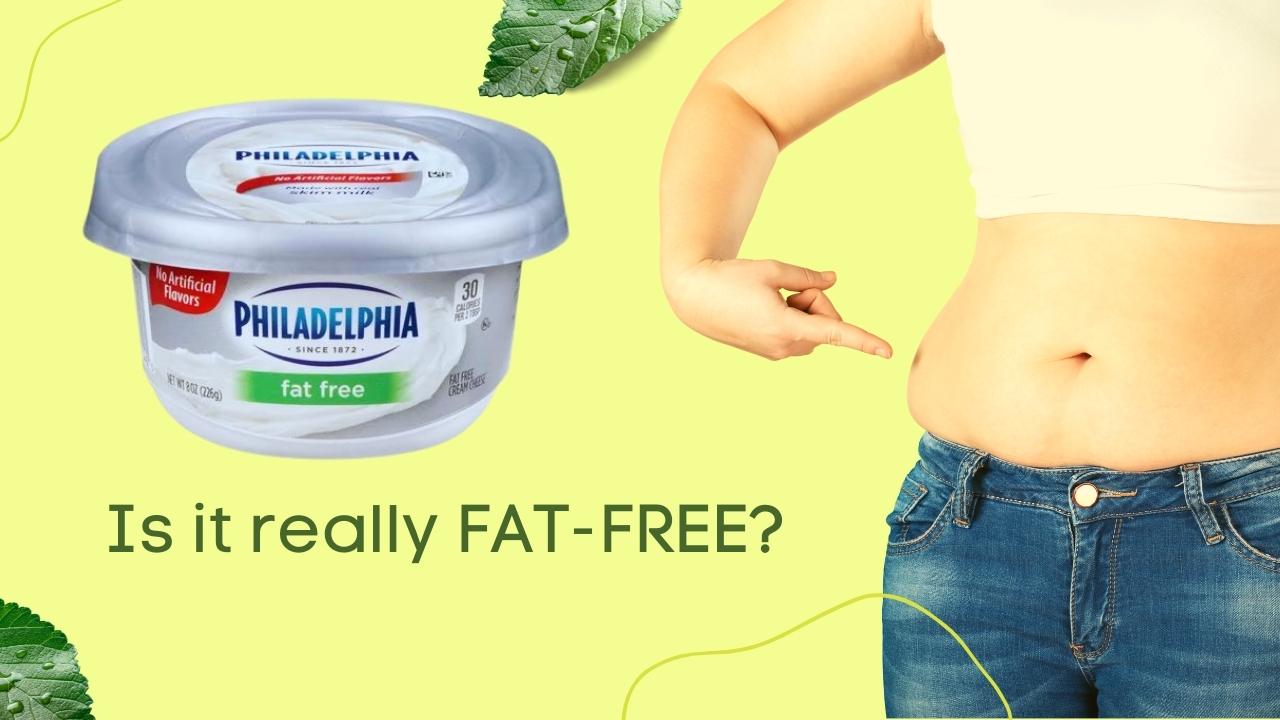

Philadelphia Fat-Free Cream Cheese looks simple at first: fewer calories, 0 grams of fat, and the familiar cream cheese name. The more useful question is whether that label tells the whole story.
Quick verdict: yes, a product can be labeled fat-free under U.S. food labeling rules when it has less than 0.5 grams of fat per serving. That does not automatically make it the healthiest cream cheese choice for everyone. The bigger picture depends on serving size, sodium, ingredients, texture expectations, and how it fits into the rest of your diet.
Key takeaways
- “Fat-free” is a regulated label claim, not a promise of absolute zero fat in every possible portion.
- Serving size matters. Nutrition numbers are typically based on a 30-gram, or about 2-tablespoon, serving.
- Philadelphia Fat-Free Cream Cheese may be useful for people reducing calories or fat, but it is more processed than traditional cream cheese.
- The main tradeoff is sodium. The reviewed label values list about 200 milligrams of sodium per 30-gram serving.
- It is not a good fit for everyone, especially people who want minimally processed foods, follow keto-style eating, or need to watch sodium closely.
Quick nutrition snapshot
The numbers below reflect the label values used in the reviewed article for a 30-gram serving. Product formulas and packaging can change, so it is smart to check the current Nutrition Facts panel before relying on older nutrition information.
| Nutrient | Amount per 30g serving | What it means in practice |
|---|---|---|
| Calories | About 30 | Lower than original cream cheese for the same serving size. |
| Total fat | 0g | Fits the front-label fat-free claim under serving-size rules. |
| Saturated fat | 0g | Much lower than traditional cream cheese. |
| Cholesterol | About 5mg | Low, but not the only factor to consider. |
| Sodium | About 200mg | Notable for a small serving, especially for sodium-conscious diets. |
| Carbohydrates | About 4g | Higher than original cream cheese in the comparison used here. |
| Total sugars | About 3g | Part of the flavor and texture tradeoff after fat reduction. |
| Protein | About 4g | Higher than original cream cheese in the comparison used here. |
What “fat-free” really means
A fat-free claim on a food label does not always mean the food contains absolute zero fat in any amount you eat. Under U.S. labeling rules, foods can use a fat-free claim when the fat content is below the allowed threshold per labeled serving and reference amount.
That detail matters because cream cheese is easy to spread past the measured serving size. If the label is based on 2 tablespoons, using 4 tablespoons changes the practical nutrition picture.
Front-label claims are a starting point. The Nutrition Facts panel and ingredient list usually tell you more about whether a food fits your everyday diet.
Ingredient analysis
Fat gives regular cream cheese much of its richness and texture. When that fat is removed or reduced, manufacturers usually need other ingredients to keep the product thick, spreadable, and familiar.
The reviewed ingredient discussion includes nonfat milk, whey protein concentrate, cheese culture, salt, stabilizing gums, a preservative, and vitamin A palmitate. The exact ingredient list should always be checked on the current package.
What the main ingredients are doing
- Nonfat milk: provides the lower-fat dairy base.
- Whey protein concentrate: supports protein content and helps with texture.
- Cheese culture: contributes to the tangy flavor associated with cream cheese.
- Salt: improves flavor and helps preservation, but also raises sodium.
- Carob bean gum, xanthan gum, and guar gum: help thicken and stabilize the spread.
- Sorbic acid: is used as a preservative in many packaged foods.
- Vitamin A palmitate: may be added as fortification after fat removal.
This does not mean the product is automatically bad. It does mean it is a processed food designed to mimic the texture of regular cream cheese with very little fat. If your priority is a shorter ingredient list, that tradeoff matters.

- Important – Refrigerated items are perishable and tend to have short shelf lives – some of these can be as little as two…
- Ships refrigerated, CANNOT be cancelled after being processed.
Fat-free vs reduced-fat vs original cream cheese
The fat-free version changes more than fat content. Compared with reduced-fat and original cream cheese, it may be lower in calories and fat but higher in sodium and carbohydrates.
| Nutrient per 30g serving | Fat-free | 1/3 less fat | Original |
|---|---|---|---|
| Calories | 30 | 70 | 100 |
| Total fat | 0g | 6g | 10g |
| Saturated fat | 0g | 3.5g | 6g |
| Carbohydrates | 4g | 2g | <1g |
| Protein | 4g | 2g | 2g |
| Sodium | 200mg | 115mg | 105mg |
The table shows the main tradeoff clearly. Fat-free cream cheese cuts calories and fat sharply, but the reviewed values show more sodium than the original version. That can matter if you use more than one serving or eat several higher-sodium foods in the same day.
Is Philadelphia Fat-Free Cream Cheese healthy?
It can be a useful choice in some diets, but it is not automatically healthier than regular cream cheese. A food can be lower in fat and calories while still being processed and relatively high in sodium for its serving size.
- Important – Refrigerated items are perishable and tend to have short shelf lives – some of these can be as little as two…
- Ships refrigerated, CANNOT be cancelled after being processed.
Where it may make sense
Philadelphia Fat-Free Cream Cheese may fit someone who wants the taste and spreadability of cream cheese while reducing calories or fat. It may also be useful when a small amount helps someone stay consistent with a calorie-controlled eating pattern.
It may be a reasonable option for:
- people comparing lower-calorie spreads
- people trying to reduce saturated fat from cream cheese
- people who prefer a familiar branded product over a new substitute
- people who use cream cheese in small measured portions
Where it may not be the best fit
The product may not suit readers who want simple, minimally processed foods. It also may not fit keto-style diets well because it is low in fat and has more carbohydrates than original cream cheese in the comparison used here.
People who need to watch sodium for blood pressure, kidney concerns, heart health, or another medical reason should be careful with packaged foods like this and follow personalized medical guidance.
Pros and tradeoffs
Potential pros
- Lower calories than original cream cheese in the reviewed serving comparison.
- 0 grams total fat and saturated fat listed per 30-gram serving.
- More protein than original cream cheese in the comparison used here.
- May help some readers keep cream cheese in their diet while reducing fat intake.
Practical tradeoffs
- Higher sodium than reduced-fat and original versions in the reviewed comparison.
- More processed texture support from gums and stabilizers.
- Different mouthfeel from full-fat cream cheese.
- Not ideal for readers who prioritize full-fat flavor, keto-style eating, or short ingredient lists.
Bottom line: Philadelphia Fat-Free Cream Cheese is best viewed as a specific nutrition tradeoff, not as a health upgrade for everyone.
Who should consider it, and who should skip it?
Consider it if
- you want a lower-calorie cream cheese option
- you measure servings rather than spreading freely
- you are reducing fat intake and still want a cream cheese-style spread
- you are comfortable with a more processed ingredient list
Skip it if
- you need to limit sodium closely
- you follow a keto-style eating pattern
- you prefer fewer additives and simpler dairy foods
- you want the richer taste and texture of original cream cheese
- you are using it for a medical diet without guidance from a clinician or dietitian
How to use it more thoughtfully
The easiest way to keep the nutrition profile realistic is to measure the serving at least once. A 2-tablespoon serving can look smaller than expected, especially on a bagel or in a recipe.
For a more balanced snack or meal, pair a small amount with foods that add fiber, protein, or volume. Whole-grain toast, vegetables, or a protein-rich breakfast can make the serving feel more satisfying than cream cheese alone.
For baking, expect texture differences. Fat-free cream cheese may not behave the same way as original cream cheese because fat affects richness, structure, and mouthfeel.
Frequently asked questions
Is Philadelphia Fat-Free Cream Cheese really fat-free?
It can be labeled fat-free if it meets the allowed fat threshold per serving. The claim is based on labeling rules and serving size, so larger portions should be considered separately.
What is the serving size?
The reviewed nutrition values use a 30-gram serving, which is about 2 tablespoons. Check the current package because serving information can change.
Is fat-free cream cheese good for weight loss?
It may help some people reduce calories if it replaces higher-calorie cream cheese in measured portions. It does not cause weight loss by itself.
Is it good for a low-sodium diet?
It may not be ideal for strict low-sodium eating because the reviewed values list about 200 milligrams of sodium per small serving. Anyone on a medical sodium limit should follow their clinician’s advice.
Is fat-free cream cheese keto-friendly?
It is usually not the best fit for a standard keto-style diet because it is low in fat and has more carbohydrates than original cream cheese in the comparison used here.
Can you bake with fat-free cream cheese?
You can use it in some recipes, but the final texture may be different. Lower fat and added stabilizers can change how it performs compared with original cream cheese.
Sources
- FDA food labeling guidance for nutrient content claims such as fat-free labeling.
- USDA FoodData Central for general nutrition reference data.
- Kraft Heinz / Philadelphia product information and package labels for product-specific nutrition details when available.
Final verdict
Philadelphia Fat-Free Cream Cheese can make sense for people who want a lower-calorie, fat-free cream cheese-style spread and are comfortable with a more processed product. It is most useful when portions are measured and the rest of the diet is balanced.
It is not automatically the healthier choice. The sodium level, ingredient list, and texture tradeoffs matter. If you choose it, treat it as a practical option for a specific goal rather than a food that is better for everyone.