
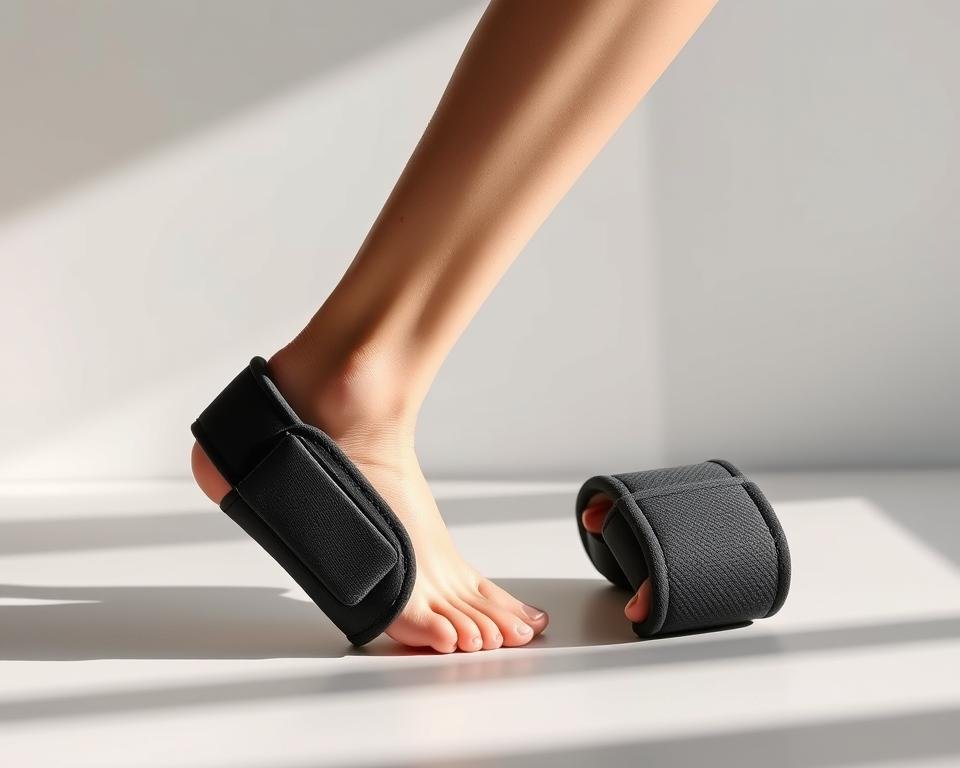

Elgin ankle weights may make sense if you specifically want hands-free resistance for controlled lower-body exercises, but this is not a straightforward “buy” recommendation. The Elgin product family can be traced to cuff-style wrist and ankle weights sold in different weight sizes, yet the adjustable 1–10 lb removable-weight design described in older versions of this review could not be confirmed as a current Elgin product.
That distinction matters. Ankle weights can make certain leg exercises harder, but the usefulness of the load depends heavily on the movement. A small amount of weight attached near the ankle changes leverage differently from a dumbbell, resistance band, or cable, so wearing ankle weights is not automatically better simply because they are convenient.
For controlled accessory exercises, an Elgin-style cuff weight can still be a practical tool. For walking, running, rehabilitation, or progressive strength training, the decision needs more care.
Quick Verdict
Elgin cuff-style ankle weights are most relevant for people who want modest wearable resistance during slow, controlled leg exercises. They are less compelling for buyers who need highly adjustable progression, want to wear weights throughout ordinary walks, or already have access to bands, dumbbells, cables, or machines.
The biggest limitation is product certainty. Elgin has sold wrist and ankle cuff weights in multiple fixed-weight sizes, but the exact adjustable model previously attributed to the brand could not be confidently matched to a current verified listing. That makes this a product-family evaluation rather than a recommendation of one clearly identified current model.
Key Takeaways
- Elgin has sold cuff-style wrist and ankle weights in multiple weight sizes.
- The previously described removable-weight, highly adjustable Elgin design could not be confirmed.
- Ankle weights are better suited to selected controlled exercises than to being worn automatically during everyday walking.
- Weight placed near the ankle can noticeably change the difficulty and mechanics of a leg movement.
- They are an accessory resistance tool, not a replacement for a broader progressive strength program.
- Readers with pain, gait problems, injuries, or clinician-directed rehabilitation should follow individualized professional guidance.
Elgin Ankle Weights Product Snapshot
| Buying Detail | What Can Be Established |
|---|---|
| Product type | Cuff-style wearable wrist/ankle weight |
| Weight format | Elgin cuff weights have existed in multiple fixed-weight denominations |
| Adjustable removable weights | Not confirmed for the product described in the older review |
| Current Amazon availability | Not confidently confirmed |
| Current price | Not verified |
| Best-supported use case | Controlled leg exercises where a small external load is useful |
| Main tradeoff | Hands-free resistance, but limited loading flexibility compared with conventional strength equipment |
What Elgin Ankle Weights Are Designed to Do
An ankle weight has a simple job: add external resistance without requiring you to hold a dumbbell or maintain tension on a band. That can be useful when the exercise itself benefits from having the hands free.
Examples include some controlled knee-extension, hip-abduction, hip-extension, and straight-leg movements. Mayo Clinic demonstrates a controlled knee-extension technique in which ankle resistance can be used while the movement remains slow and deliberate.
The key phrase is “controlled.” An ankle weight becomes part of the moving limb, so the effect is different from resistance held closer to the torso. That can make even a modest cuff feel much more demanding during certain movements.
Key Features and Buying Details
Fixed Cuff Format vs Adjustable Designs
The strongest available Elgin product evidence points to cuff-style weights sold in separate weight denominations. That is different from an adjustable ankle weight that lets you remove small inserts from one cuff.
This distinction changes the buying decision. A fixed cuff is simple: you choose a weight and use it. An adjustable model offers more flexibility because one product can cover several resistance levels, but it may also be bulkier.
If you were specifically looking for an Elgin model with removable internal weights, that feature should not be assumed. The earlier description of removable bars and a 1–10 lb adjustment range is not sufficiently verified.
Fit, Fastening, and Bulk
Historical Elgin cuff documentation describes a long hook-and-loop-style strap, but there is not enough current product information to make stronger claims about comfort, exact strap dimensions, material, breathability, or how securely a current model stays in place.
Those details matter more than they may seem. A cuff that moves during repeated leg lifts can become distracting, while a bulky cuff may interfere with the natural range of motion in some exercises.
Before buying any ankle weight, check the actual cuff dimensions, closure design, weight per cuff, and whether the listed weight refers to one cuff or a pair. Those practical details can matter more than cosmetic features.
Best Ways to Use Ankle Weights
Ankle weights make the most sense when the exercise lets you control both the movement and the resistance. Slow accessory exercises are easier to monitor than continuous activities where every step repeats the added load.
Useful contexts may include selected seated, standing, or lying leg exercises where the load remains light enough to preserve smooth movement. If adding the cuff causes swinging, jerking, shortened range of motion, or compensation elsewhere in the body, the resistance is probably no longer helping the exercise.
Progress should come from maintaining good movement quality rather than simply attaching more weight.
Walking vs Controlled Strength Exercises
One of the biggest mistakes with ankle weights is assuming that if they make a leg exercise harder, they should also make walking better.
Those are different use cases. During a controlled leg exercise, you can deliberately manage the speed, range of motion, repetitions, and rest. Walking involves hundreds or thousands of repeated steps, so a small load attached at the ankle is repeated continuously.
Harvard Health’s guidance on using wearable ankle weights draws a practical distinction between selected strengthening exercises and routine walking or aerobic use. That does not mean every weighted walk will cause injury, but it does mean ankle weights should not automatically be treated as a simple upgrade to an ordinary walk.
A small gait study indexed by PubMed also found that adding substantial ankle loads changed physiological demand and some aspects of walking mechanics. The study involved only 10 able-bodied participants and relatively heavy experimental loading, so it should not be used to promise a particular calorie increase. It does support the more limited point that ankle loading during walking is not biomechanically neutral.
Why Ankle-Mounted Weight Feels Different
Where resistance is placed matters. A weight attached farther from the hip creates a longer lever than the same amount of resistance held closer to the body.
That is why a cuff weighing only a few pounds can feel surprisingly demanding during a straight-leg raise or knee extension. The number on the cuff does not tell the whole story.
This is also why more weight is not automatically better. If you have to swing the leg, rush the repetition, or alter your posture to complete the movement, the exercise may become less useful even though the resistance is technically heavier.
Main Limitations and Safety Considerations
The main limitation of ankle weights is not that they are ineffective. It is that their usefulness is narrow compared with more scalable strength equipment.
They can add resistance, but the same placement that makes a small load feel challenging can also change how you move. The appropriate amount therefore depends on the exercise, your current capacity, and whether you can maintain controlled form.
Running deserves extra caution. Speed, repetitive impact, and a weight attached at the end of the limb create a different demand from slow accessory work. There is not enough reason to treat ankle weights as a default running tool.
Rehabilitation should also be separated from general fitness use. Ankle weights may appear in clinician-directed exercise programs, but that does not mean a generic cuff weight is appropriate for every injury, surgery, joint problem, or recovery plan. If resistance was prescribed as part of rehabilitation, the clinician’s loading instructions should guide the exercise.
Stop an exercise if the added weight produces sharp pain, unusual joint discomfort, or a clear loss of movement control.
Realistic Expectations for Strength and Muscle Gain
Ankle weights can make an exercise harder, but that does not make them a complete strength-training system.
For someone who currently performs an unweighted leg movement, adding a cuff may provide a useful next step. The problem comes later: strength and muscle-building programs usually benefit from progressively increasing resistance in a structured way.
Current resistance-training guidance from the American College of Sports Medicine stresses matching training to the goal, training consistently, and progressing resistance appropriately. Ankle weights can fit inside that framework, but they are only one tool.
If your main goal is substantial lower-body strength or hypertrophy, dumbbells, machines, cables, resistance bands, or other scalable resistance tools usually provide more room to progress.
Who Elgin Ankle Weights May Be Best For
The best fit is a person who has a specific reason to use wearable resistance rather than simply wanting to make all movement harder.
| Your Situation | How Well Ankle Weights Fit | Why |
|---|---|---|
| Controlled leg accessory exercises | Good fit | Hands-free resistance can make selected movements more challenging |
| You want simple fixed resistance | Potentially good fit | A fixed cuff avoids adjustment hardware |
| You need frequent small load changes | Less convenient | A truly adjustable system or another resistance tool offers finer progression |
| You want to make ordinary walking harder | Questionable fit | Walking and controlled resistance exercise should not be treated as the same use case |
| You want substantial strength progression | Limited fit | Bands, dumbbells, cables, and machines offer more scalable loading |
| You are following rehabilitation exercises | Depends on the plan | Loading should match clinician-directed guidance |
Who Should Skip Them
Elgin-style ankle weights are probably unnecessary if you already have equipment that matches your training goal more directly.
If you want stronger squats, deadlifts, presses, rows, or other compound movements, ankle cuffs add little compared with conventional resistance tools. They are also a weak match if you need precise, frequent load progression.
People with current joint pain, gait problems, recent injuries, balance concerns, or an active rehabilitation plan should not assume that wearable ankle resistance is appropriate simply because the cuff itself is light.
Elgin Ankle Weights vs Other Resistance Options
The better question is not “Are ankle weights good?” It is “Are ankle weights the right form of resistance for this movement?”
- Ankle weights: Useful for selected hands-free leg movements, but progression may be limited.
- Resistance bands: Portable and easy to scale by changing band tension, though resistance changes through the movement.
- Dumbbells: More flexible for whole-body strength work and easier to progressively load.
- Cables and machines: Better when you want controlled resistance with larger progression ranges, though they require gym equipment.
- Bodyweight: May be enough when the exercise is still challenging without added load.
An ankle cuff earns its place when it solves a specific exercise problem better than those alternatives.
Are Elgin Ankle Weights Worth Buying?
They can be worth considering if you specifically want cuff-style wearable resistance for controlled leg exercises and you are comfortable with a fixed-weight format.
There are two important reasons not to give a stronger recommendation. First, the exact adjustable Elgin model previously described could not be confirmed. Second, a current purchase listing with enough verified detail was not available for a reliable assessment of price, materials, packaging, sizing, or current value.
That makes the practical decision straightforward: judge the product you actually find by its verified weight per cuff, closure, cuff dimensions, fixed-versus-adjustable design, and whether those details match the exercise you plan to perform.
If your goal is simply “get stronger,” an ankle weight is not automatically the most useful purchase. If your goal is “add a small amount of hands-free resistance to a specific leg exercise,” the format makes considerably more sense.
Frequently Asked Questions
Can you walk with ankle weights?
You can physically walk while wearing ankle weights, but that does not mean weighted walking should be the default use. Added mass at the ankle can change walking demand and mechanics, so controlled exercise is a more defensible use case than automatically adding ankle weights to everyday walks.
Are ankle weights suitable for running?
They are not an obvious choice for running. Running already involves repetitive impact and faster limb movement, so adding distal load should not be treated as a simple way to increase workout intensity.
How much ankle weight should a beginner use?
There is no single starting weight that is appropriate for every person or exercise. Start with enough resistance to make the movement harder without changing technique, reducing control, or causing discomfort.
Are adjustable ankle weights better than fixed weights?
They are better for some buyers, not universally better. Adjustable designs make progression easier because one cuff can cover multiple loads, while fixed cuffs can be simpler and less bulky. The better option depends on how often you need to change resistance.
Is the Elgin ankle weight adjustable?
The adjustable removable-weight configuration previously associated with Elgin could not be confidently verified. The clearest Elgin product evidence instead points to cuff-style wrist and ankle weights sold in multiple fixed-weight sizes.
Do ankle weights replace strength training?
No. They can add resistance to selected exercises, but they do not replace a progressive strength program that trains major muscle groups with enough resistance and room for continued progression.
Can ankle weights be used during rehabilitation?
They sometimes appear in rehabilitation exercises, but the appropriate movement and loading should come from the individual treatment plan. A generic ankle-weight routine should not replace clinician-directed rehabilitation.
Why can a light ankle weight feel so difficult?
Because the weight is positioned near the end of the leg. That longer lever can make a modest amount of added mass noticeably increase the effort required during movements such as leg raises or knee extensions.
Final Verdict
Elgin ankle weights make the most sense as a simple accessory for controlled leg exercises, not as an all-purpose way to make walking, running, or every workout harder.
The main buying issue is product identity. Elgin has sold cuff-style wrist and ankle weights, but the older adjustable, removable-weight description cannot be treated as confirmed current product information. That means the brand name alone is not enough to justify a purchase.
If you find an Elgin cuff that clearly states its weight, size, closure, packaging, and intended format, compare those details with the exact movement you want to train. Choose it when hands-free ankle resistance solves a real training need. Choose bands, dumbbells, cables, or machines when you need broader exercise options or more precise progression.




Don’t Miss These Picks